Sleep & RelaxationA Clear Guide to Better Nights
How sleep works, sleep through history, and eight relaxation techniques step by step.
42 pages A4 · phone edition 116 pages · full guide coming soon
Read a previewRead a preview
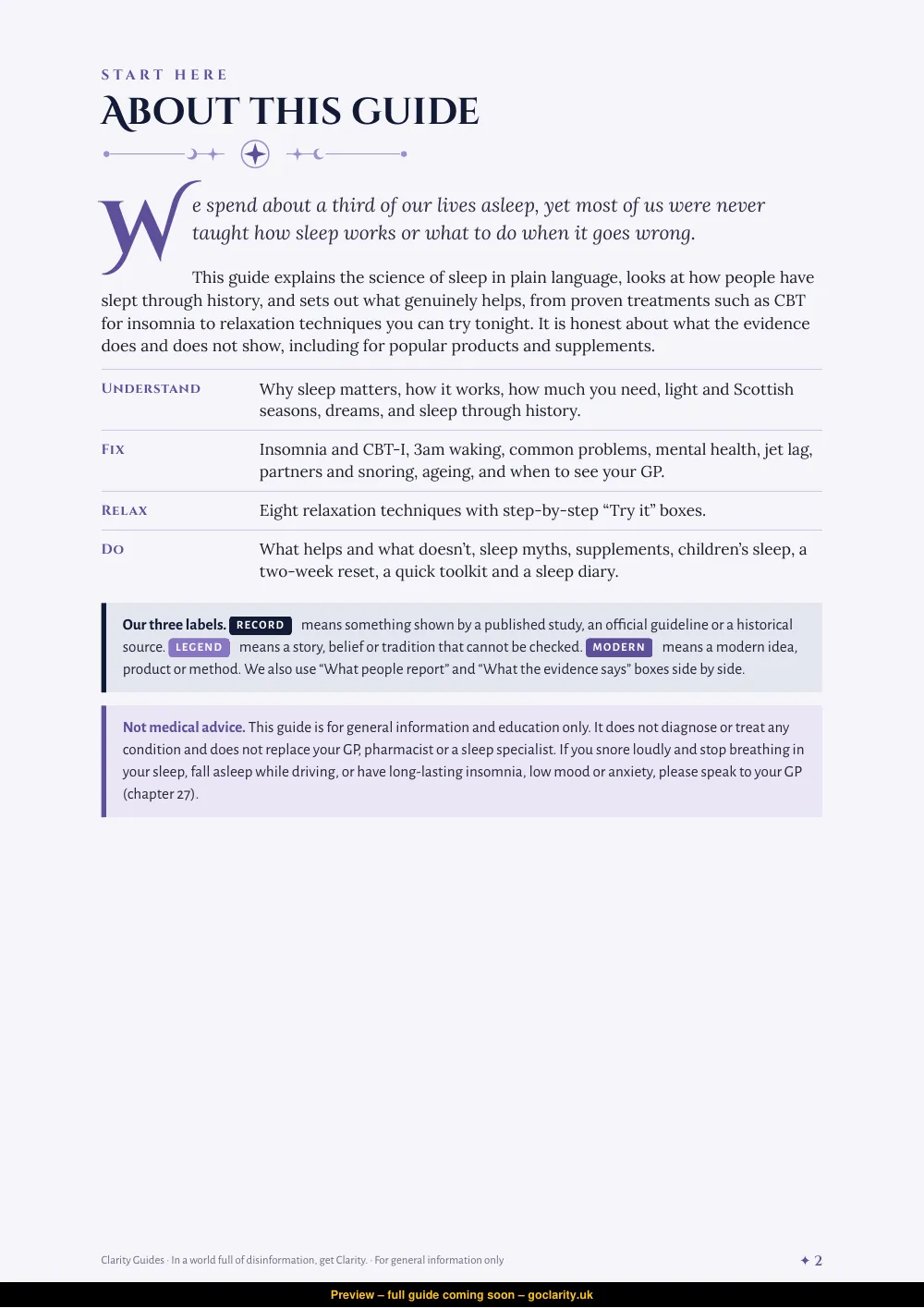
Read the first four pages right here (of 42). Swipe to turn, tap a page to see it bigger.
The full guide is coming soon.
About this guide
Sleep & Relaxation: A Clear Guide to Better Nights explains, in plain language, how sleep works and what genuinely helps when it goes wrong. We spend about a third of our lives asleep, yet most of us were never taught any of this.
More about this guide
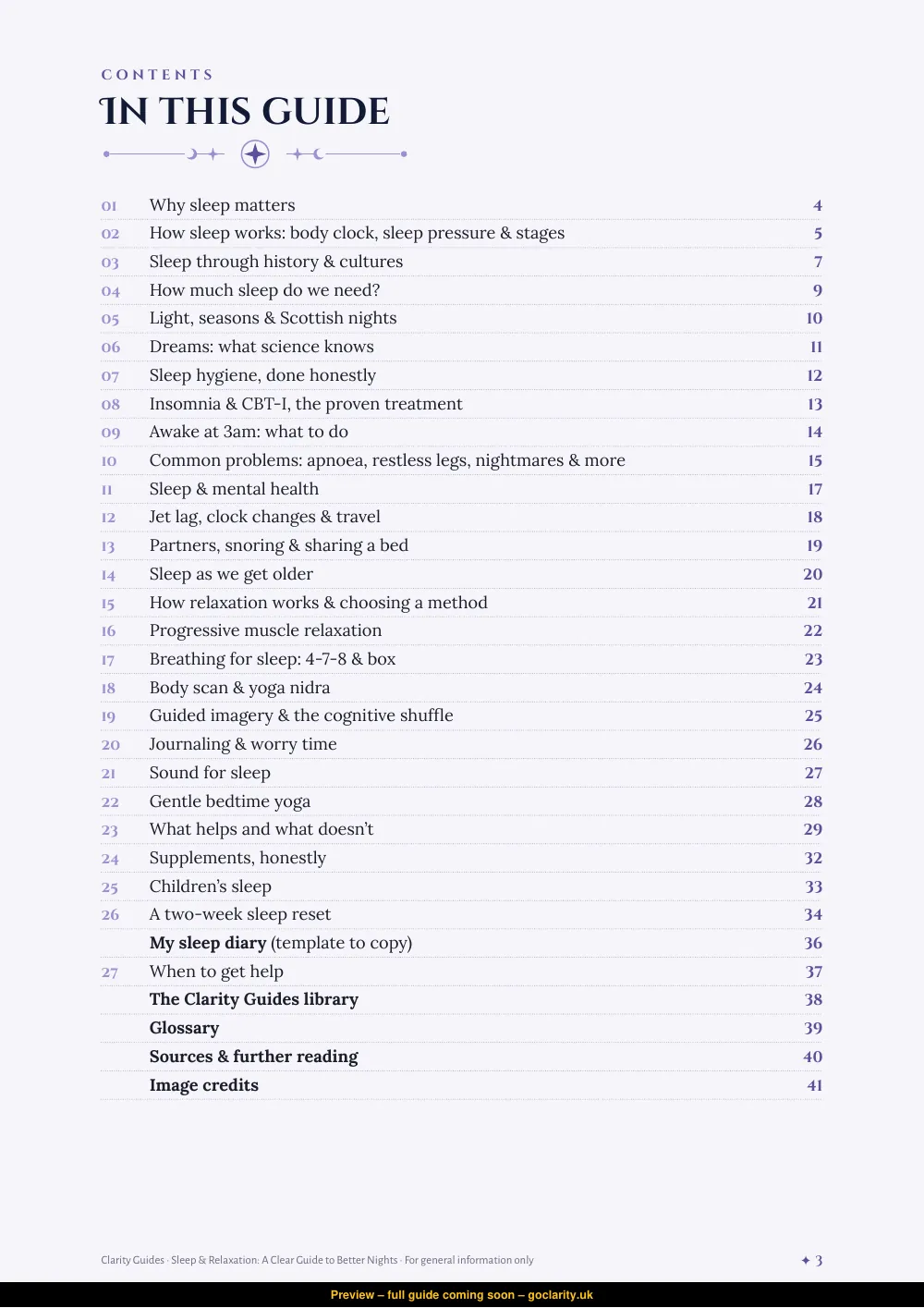
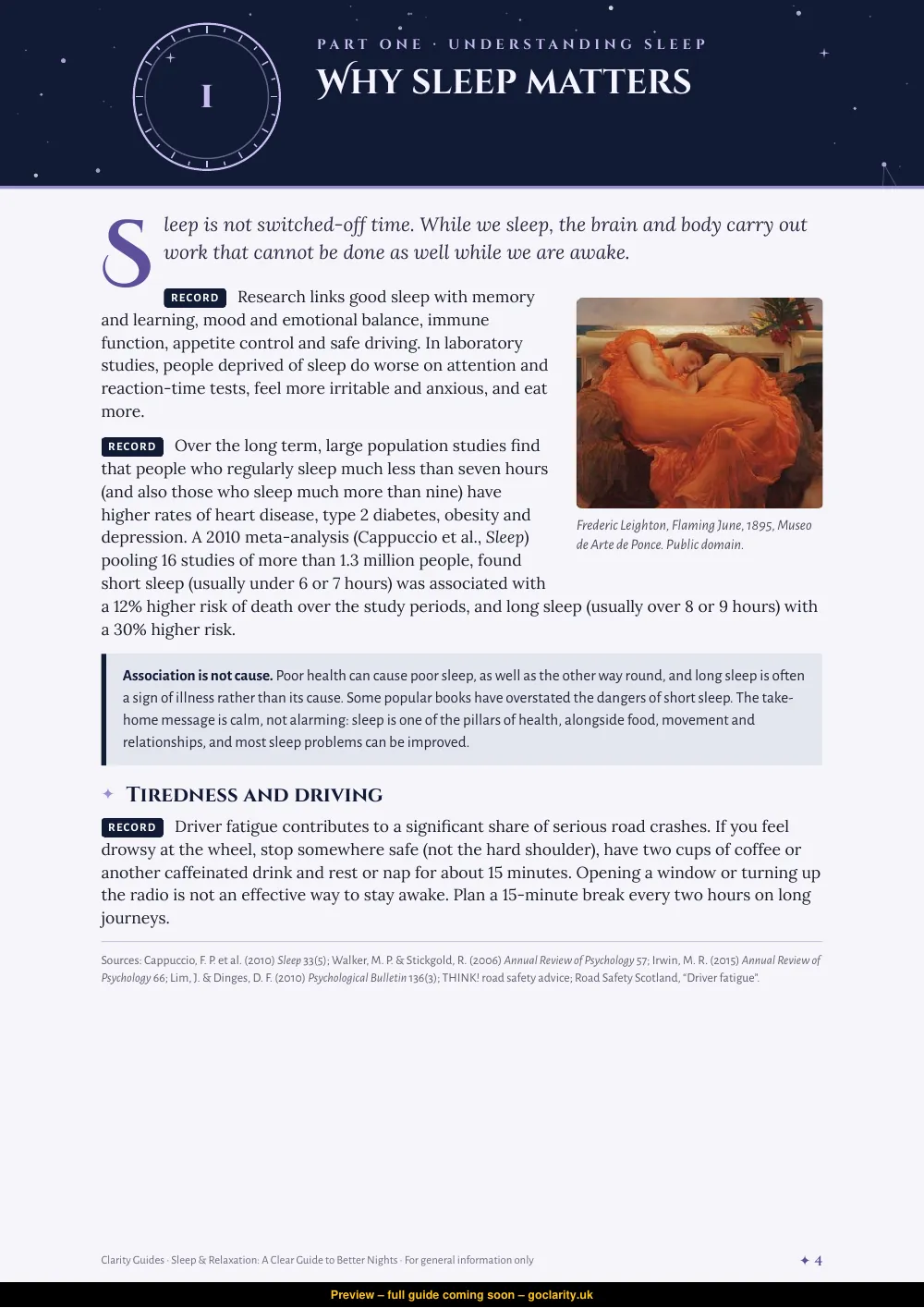
The first part covers why sleep matters, the body clock, sleep pressure and sleep stages, how much sleep we need according to NHS guidance, light and Scotland’s long dark nights, dreams, and how people have slept through history, from “first and second sleep” to the siesta, inemuri and Scottish box beds.
The second part tackles problems: sleep hygiene done honestly, insomnia and CBT-I, the proven talking treatment (including Sleepio, which is free in Scotland), what to do when you wake at 3am, apnoea, restless legs and nightmares, sleep and mental health, jet lag and clock changes, snoring partners and sleep as we get older.
Then come eight relaxation techniques with step-by-step “Try it” boxes: progressive muscle relaxation, 4-7-8 and box breathing, body scan and yoga nidra, guided imagery and the cognitive shuffle, worry time, sound and gentle bedtime yoga. It finishes with what helps and what doesn’t, an honest look at supplements, children’s sleep, a two-week reset, a sleep diary and when to get help. It does not replace your GP, pharmacist or a sleep specialist.
What’s inside
- Why sleep matters and how it works
- Sleep through history and cultures
- Light, seasons and Scottish nights
- Sleep hygiene, done honestly
- Insomnia and CBT-I
- Awake at 3am: what to do
- Common sleep problems
- Eight relaxation techniques, step by step
- Supplements, honestly
- Children’s sleep
- A two-week reset, sleep diary and when to get help
Not medical advice. This guide is for general interest and education only. Speak to your GP or a qualified professional about any health concern.