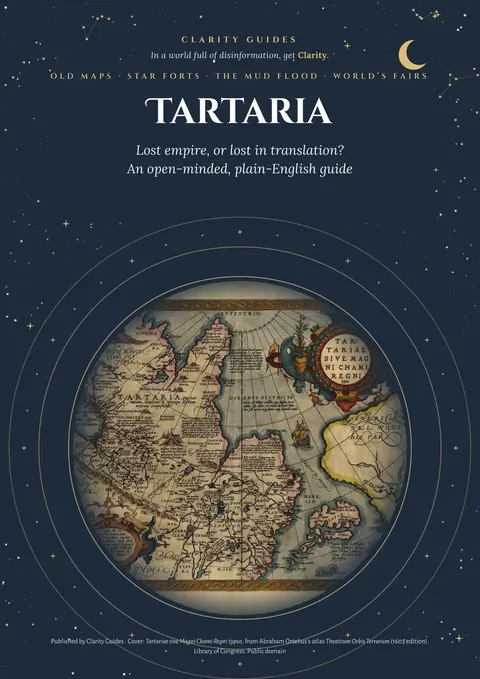
TartariaLost Empire or Lost in Translation?
Old maps of Great Tartary, the 1771 Britannica, star forts, the mud flood and the questions still open.
28 pages A4 · phone edition 71 pages · full guide coming soon
Read a previewRead a preview
Read the first four pages right here (of 28). Swipe to turn, tap a page to see it bigger.
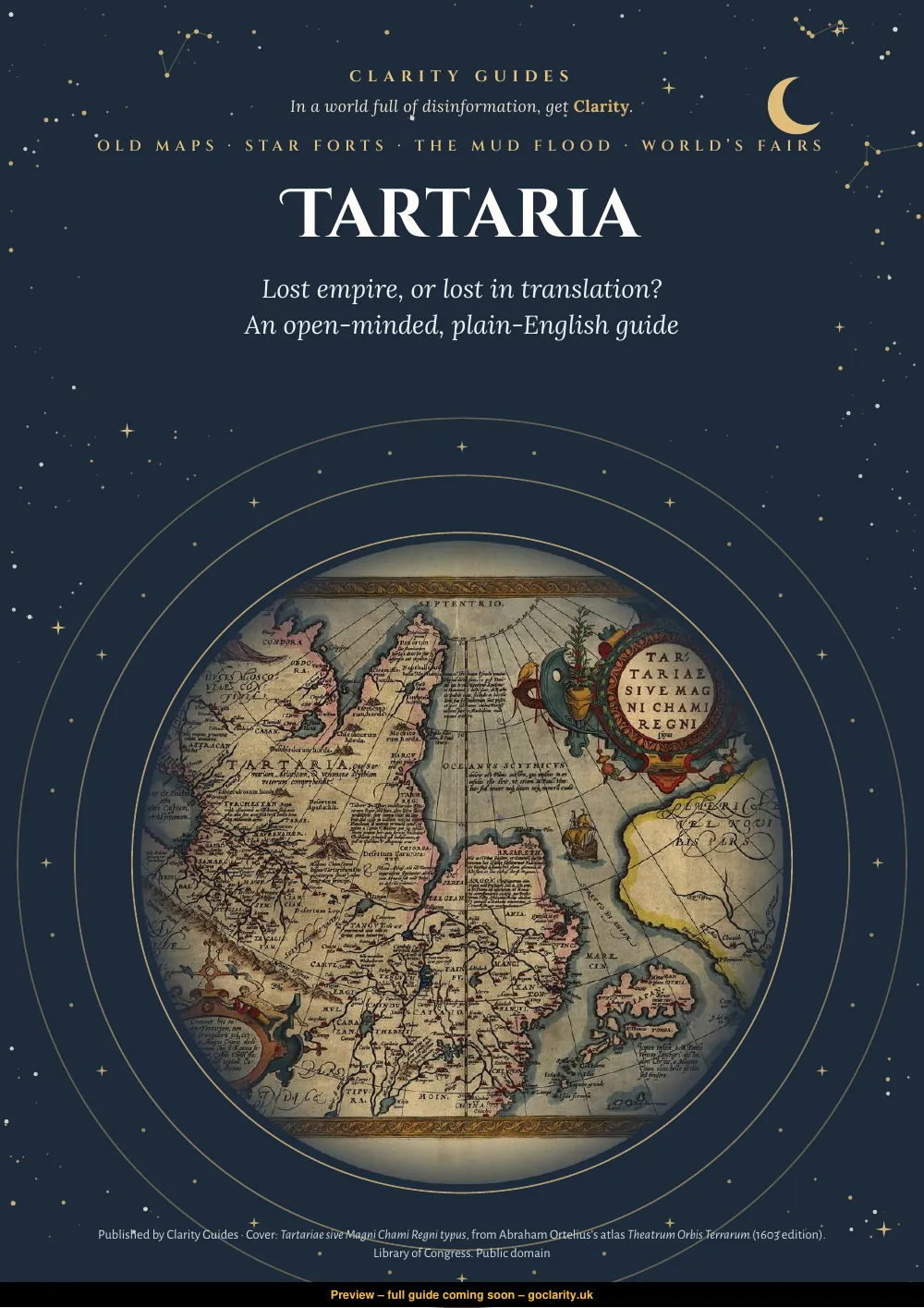
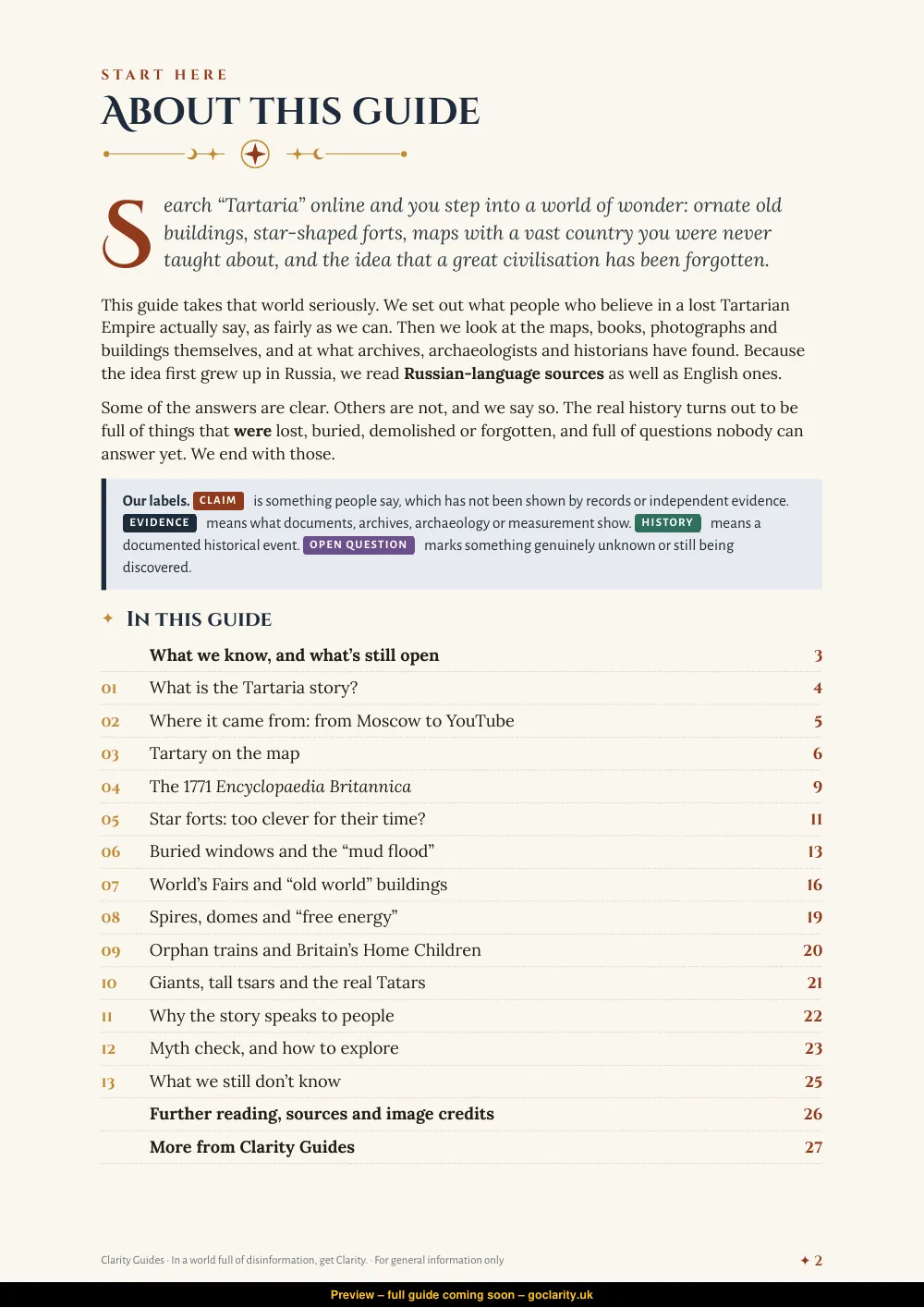
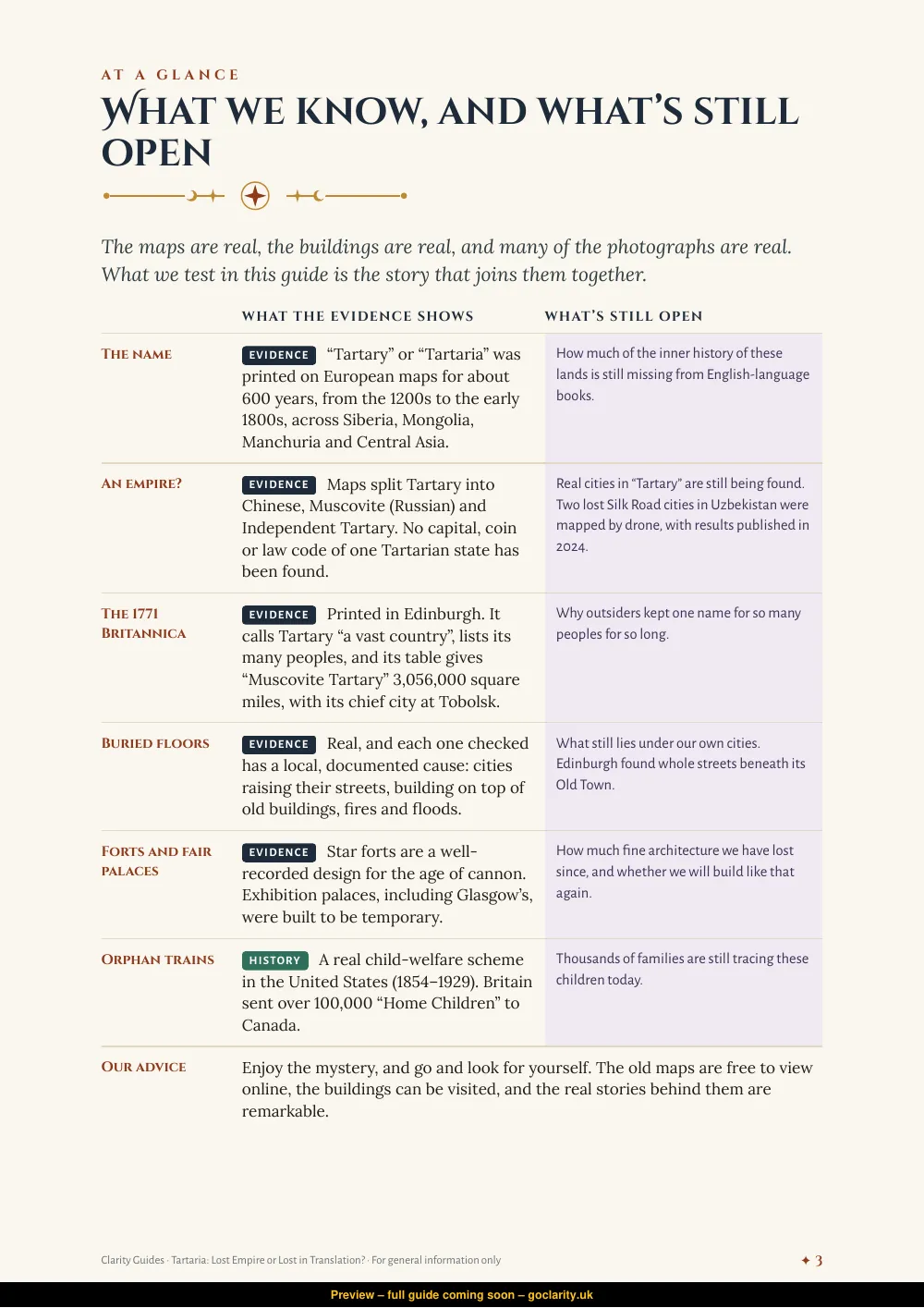
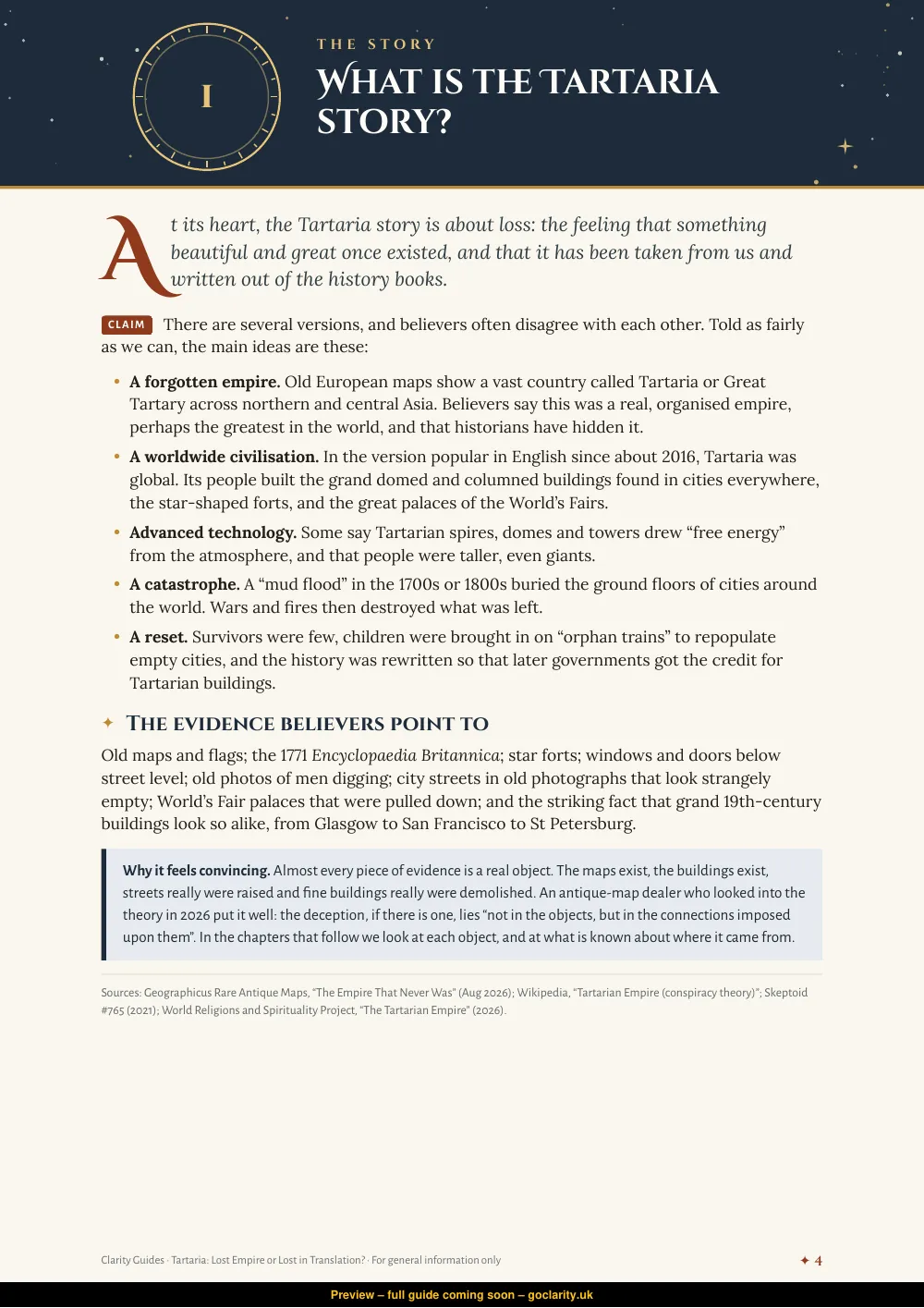
The full guide is coming soon.
About this guide
Search “Tartaria” online and you step into a world of wonder: ornate old buildings, star-shaped forts, maps with a vast country you were never taught about, and the idea that a great civilisation has been forgotten. This 28-page guide looks at the story with an open mind, in plain English.
More about this guide
It sets out what believers say, fairly and in their own terms, then goes back to the original sources: the old European maps of “Great Tartary”, the 1771 Encyclopaedia Britannica printed in Edinburgh, which we read page by page, star forts such as Fort George, the “mud flood” and buried streets from Chicago to Edinburgh, and the vanished exhibition palaces of Chicago and Glasgow.
It also covers the giant columns of St Petersburg, spires and Tesla’s tower, the real history of the orphan trains and Britain’s Home Children, and the real Tatar peoples behind the old name. Every point is labelled as a claim, evidence, history or an open question.
The guide ends with the questions that are still genuinely open: how much fine architecture we have lost, whose history gets written down, what still lies under the ground, and whether we will build beautifully again. It includes a myth check, a guide to exploring the old maps and archives yourself, and places to visit in Scotland.
What’s inside
- What we know, and what’s still open
- What is the Tartaria story?
- Where it came from: from Moscow to YouTube
- Tartary on the map
- The 1771 Encyclopaedia Britannica
- Star forts, and Scotland’s Fort George
- Buried windows and the “mud flood”
- World’s Fairs and Glasgow’s vanished exhibitions
- St Petersburg’s giant columns
- Spires, domes and Tesla’s tower
- Orphan trains and Britain’s Home Children
- Giants, tall tsars and the real Tatars
- Myth check, and how to explore
- What we still don’t know
For general information only. Beliefs and theories are described as claims; historical facts are sourced inside the guide.