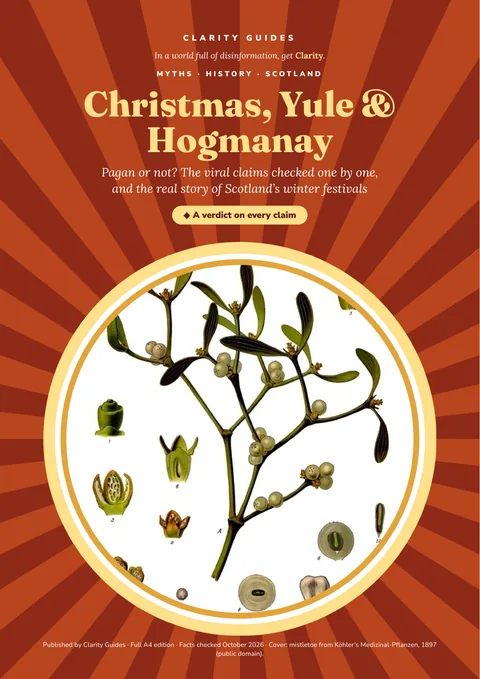
Christmas, Yule and HogmanayPagan or Not?
Viral December claims checked against the evidence, with Scotland’s own winter traditions included.
44 pages A4 · phone edition 82 pages
On sale this week The full guide goes on sale here this week, £2.22 for its first week, then £3.49.
Read a previewRead a preview
Read the first four pages right here (of 44). Swipe to turn, tap a page to see it bigger.
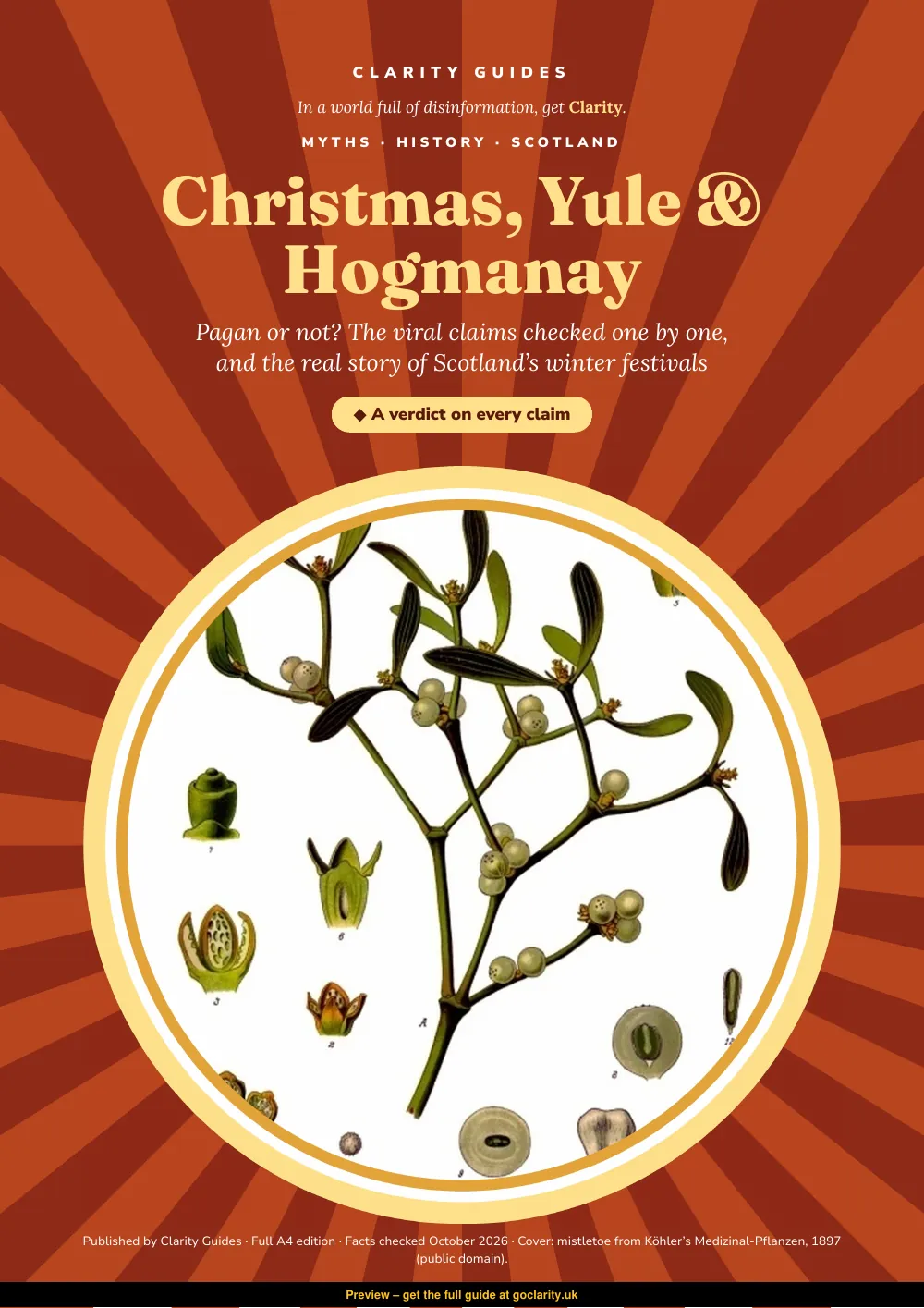
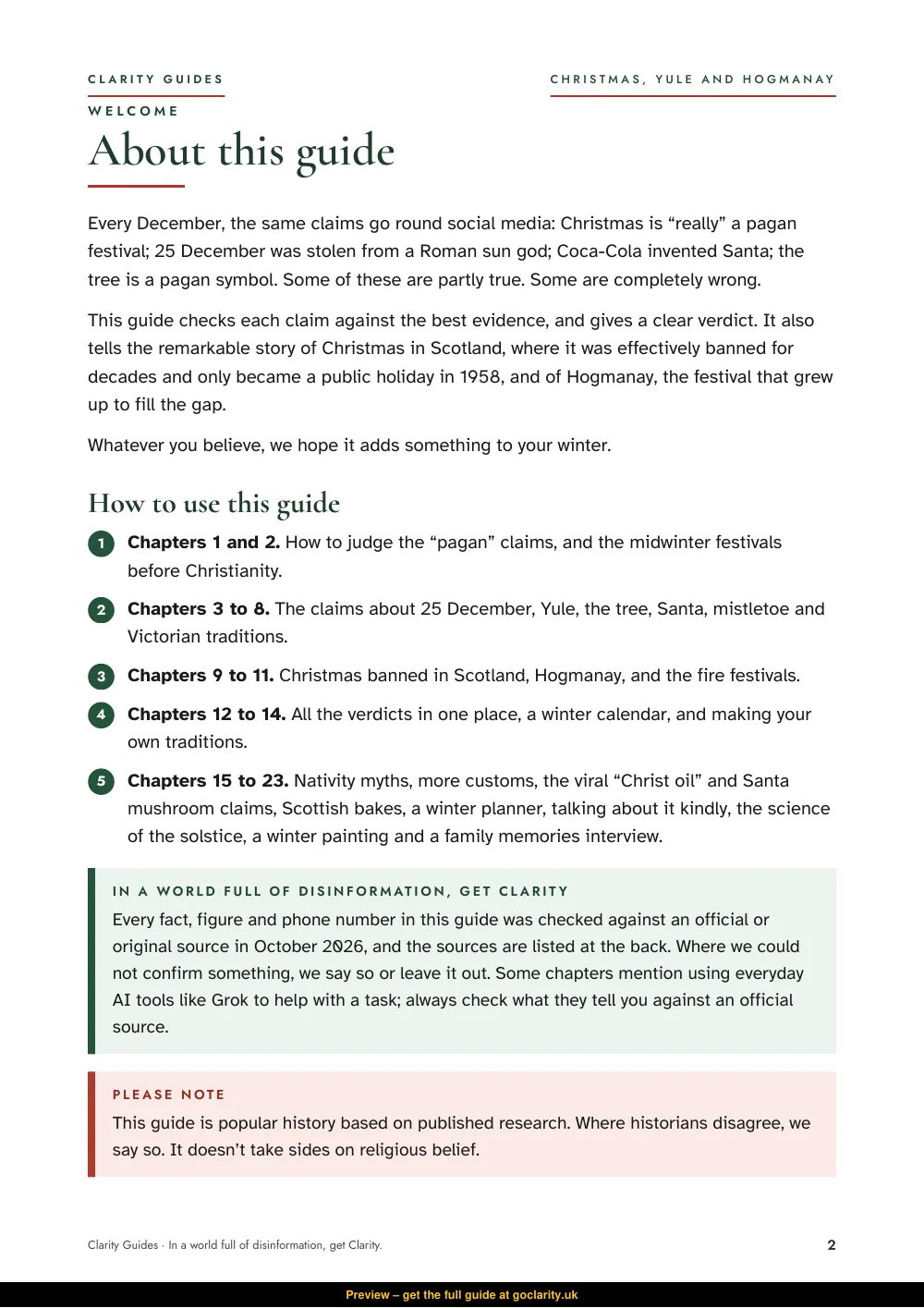
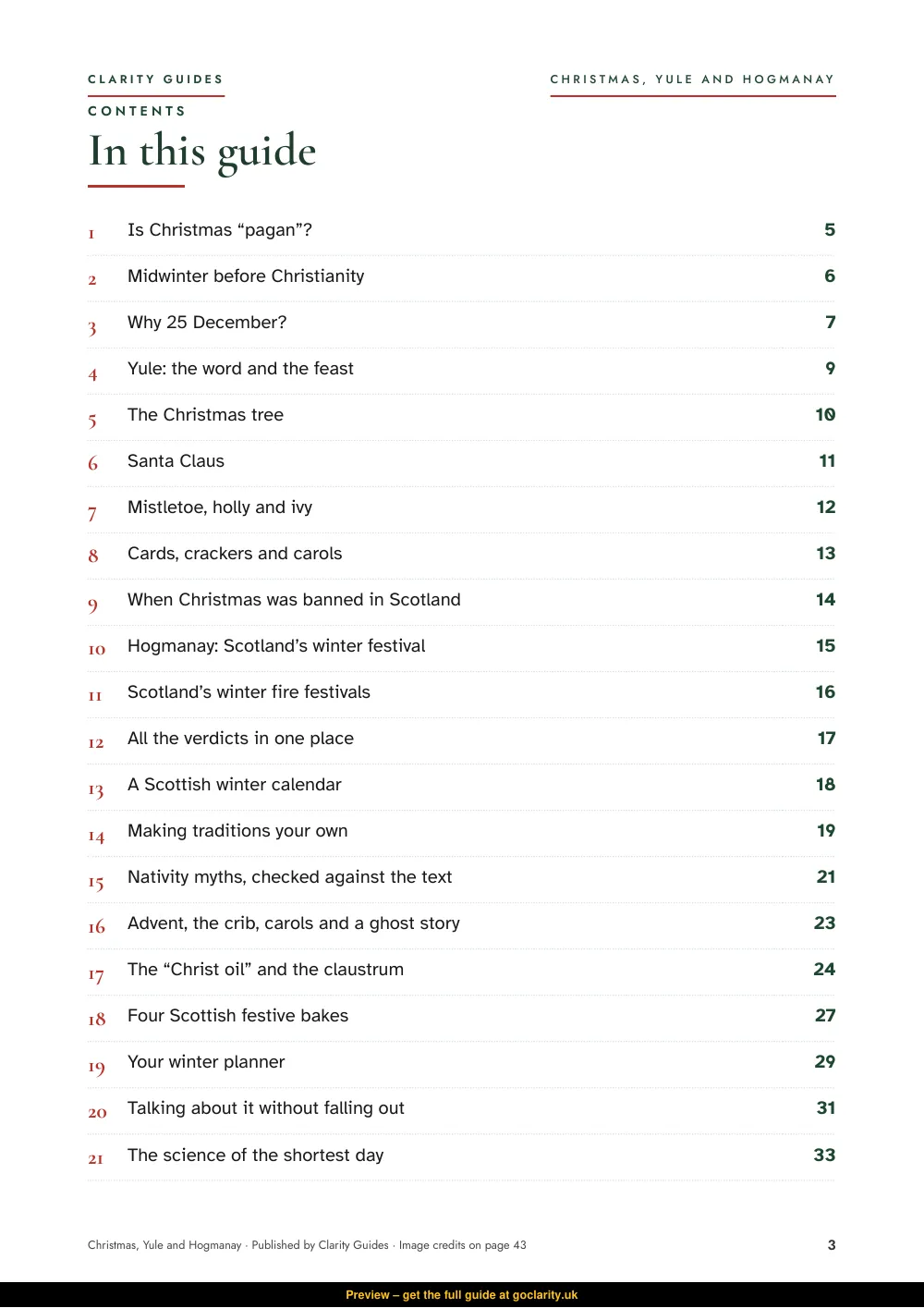
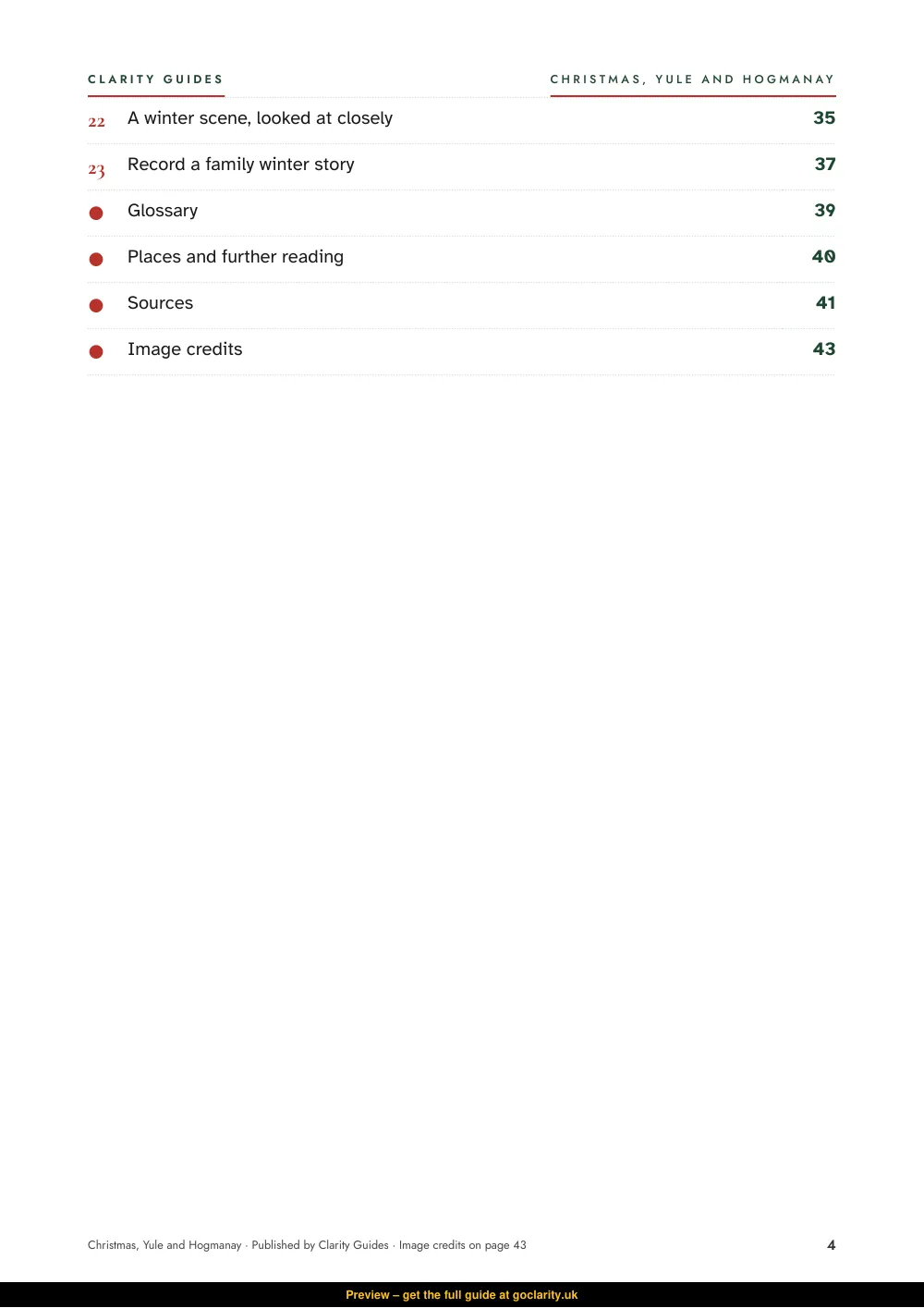
The full guide goes on sale this week.
About this guide
Viral December claims checked against the evidence: was Christmas “stolen” from a pagan festival? Did Coca-Cola invent Santa? Is there really a “Christ oil” in your brain? What about the tree, Yule and Hogmanay? This guide separates what’s partly true from what’s completely wrong, and includes Scotland’s own traditions.
More about this guide
It looks at midwinter before Christianity, why 25 December, the word Yule, the Christmas tree, Santa Claus, mistletoe, holly and ivy, and cards, crackers and carols, with a clear verdict on each. A chapter on the “Christ oil” and the claustrum checks the brain claim against the science.
Scotland gets its own chapters: when Christmas was banned, Hogmanay, and the winter fire festivals. There is also a Scottish winter calendar, four festive bakes, a winter planner, and tips for talking about it all without falling out.
What’s inside
- Is Christmas “pagan”?
- Midwinter before Christianity
- Why 25 December?
- Yule: the word and the feast
- The Christmas tree
- Santa Claus
- Mistletoe, holly and ivy
- Cards, crackers and carols
- When Christmas was banned in Scotland
- Hogmanay: Scotland’s winter festival
- Scotland’s winter fire festivals
- All the verdicts in one place
- A Scottish winter calendar
- Making traditions your own
- Nativity myths, checked against the text
- Advent, the crib, carols and a ghost story
- The “Christ oil” and the claustrum
- Four Scottish festive bakes
- Your winter planner
- Talking about it without falling out
- The science of the shortest day
- A winter scene, looked at closely
- Record a family winter story
Popular history based on published research. It does not take sides on religious belief.