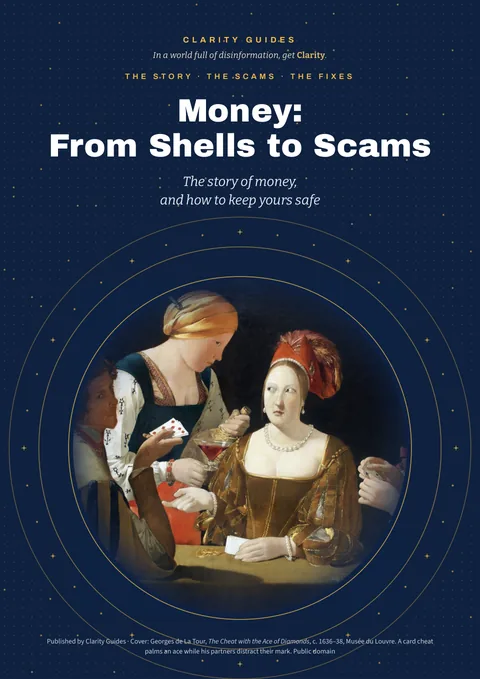
MoneyFrom Shells to Scams
The story of money, from shells to crypto, and how to spot and stop the scams that came with it.
50 pages A4 · phone edition 133 pages · full guide coming soon
Read a previewRead a preview
Read the first four pages right here (of 50). Swipe to turn, tap a page to see it bigger.
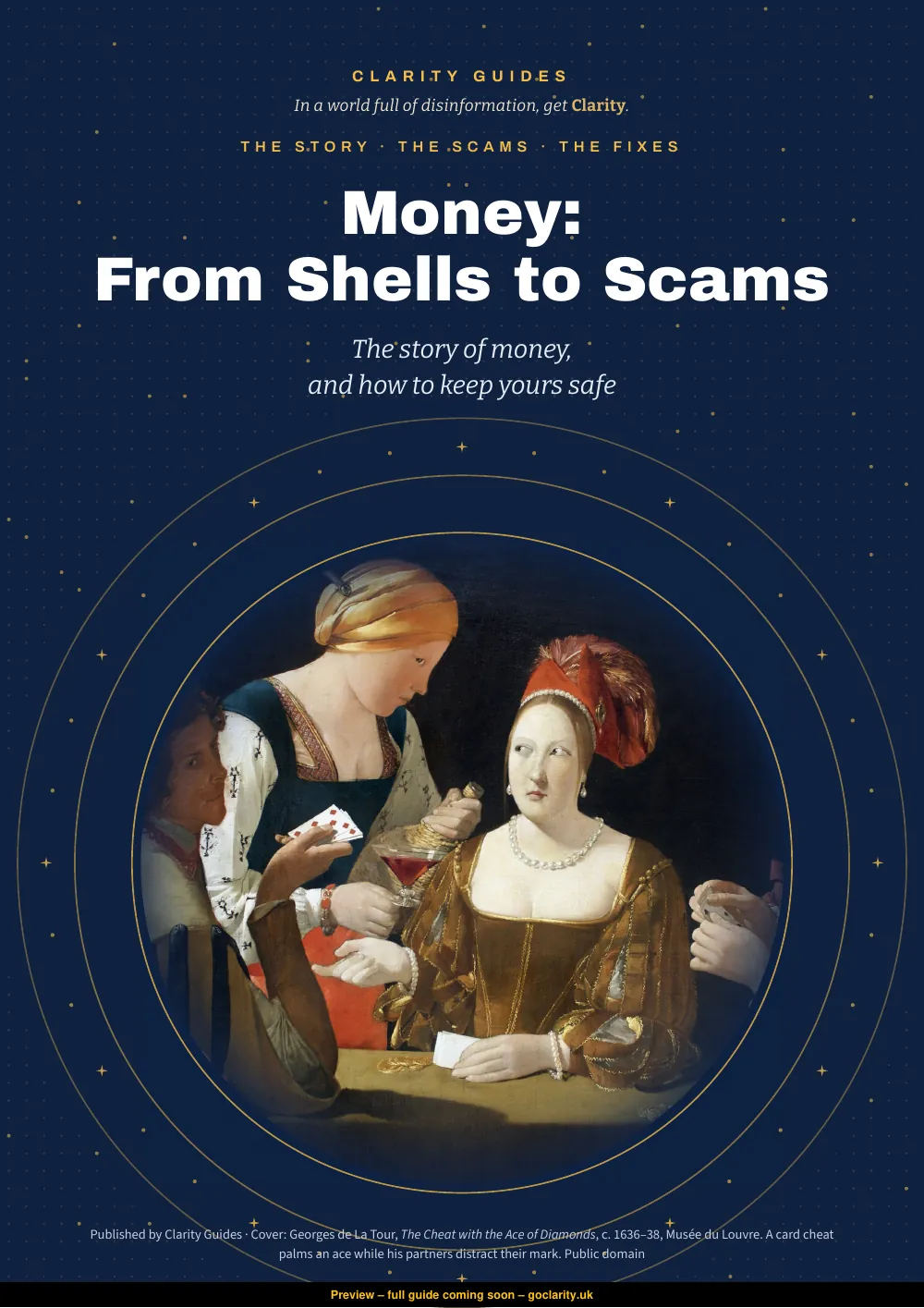
The full guide is coming soon.
About this guide
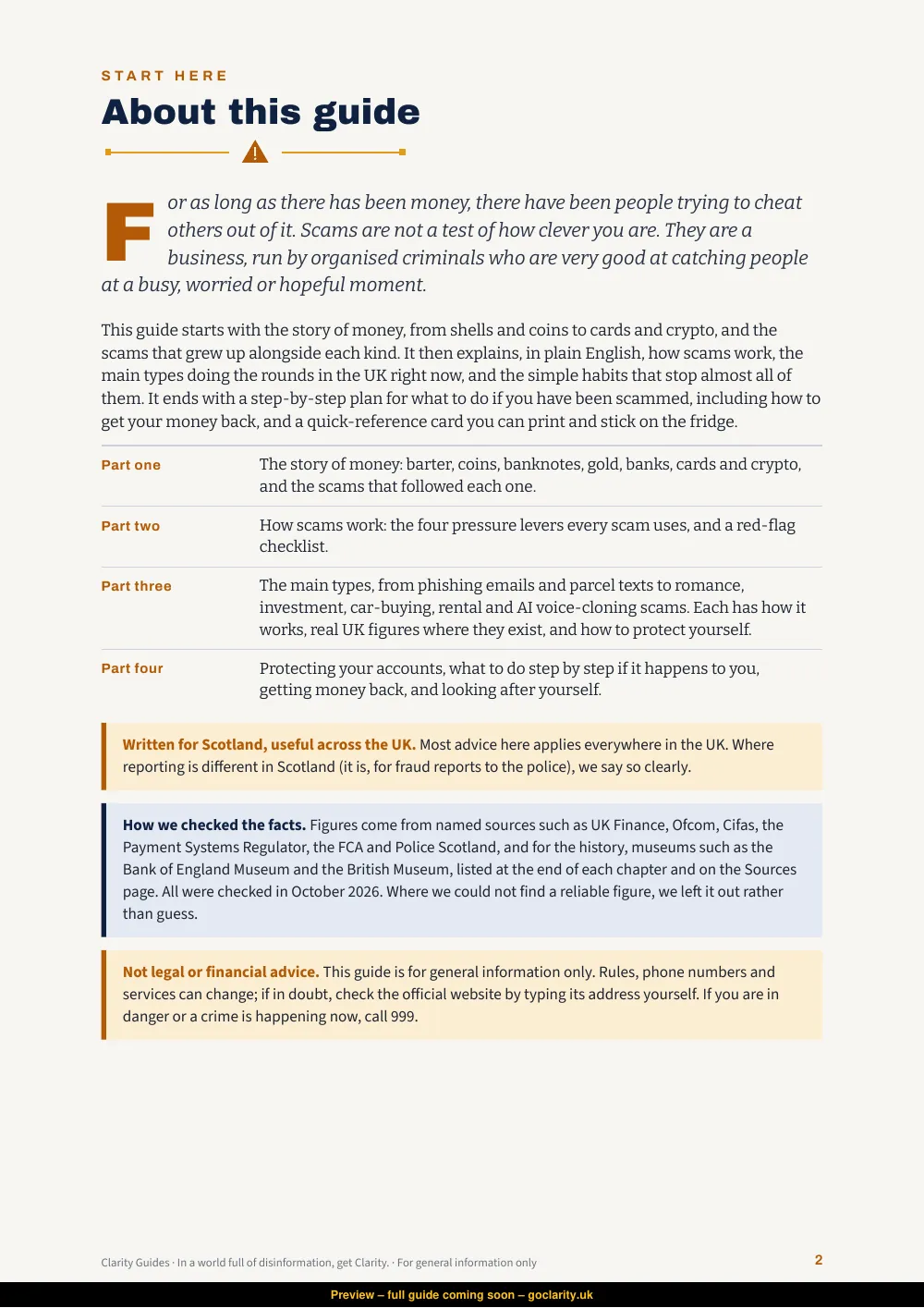
The story of money, and how to keep yours safe. For as long as there has been money, there have been people trying to cheat others out of it. Scams are not a test of how clever you are. They are a business, run by organised criminals who are good at catching people at a busy, worried or hopeful moment.
More about this guide
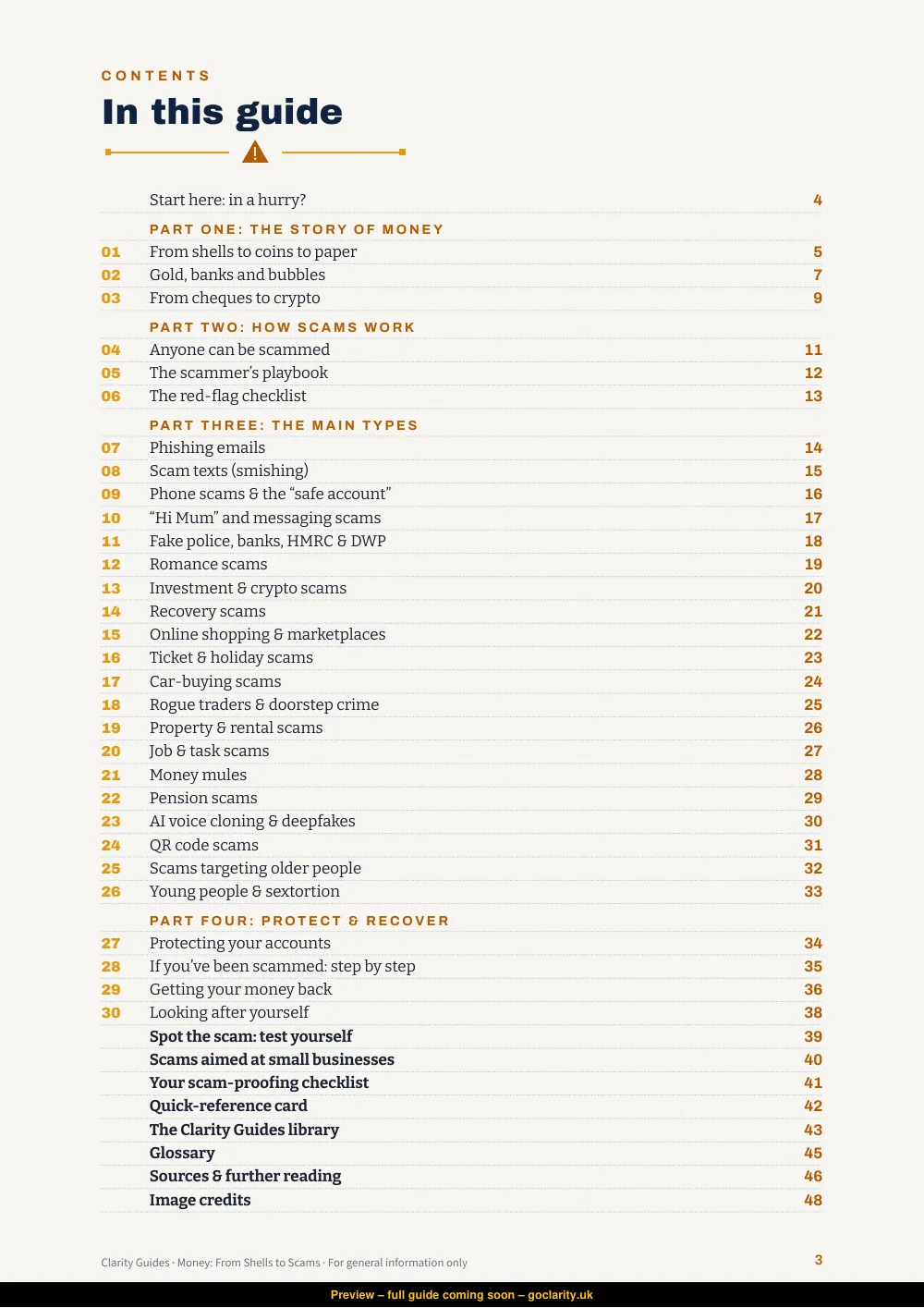
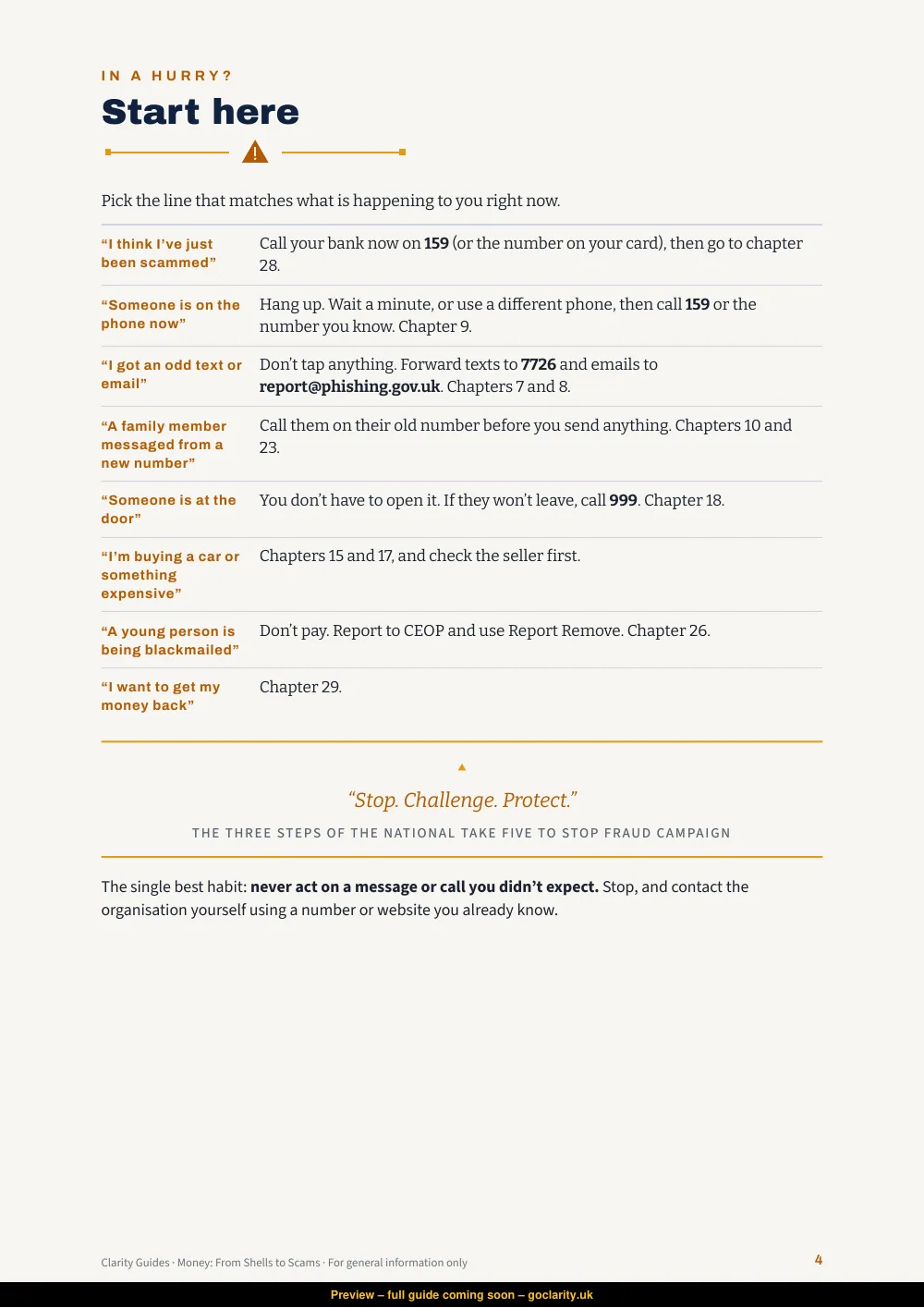
It opens with an “In a hurry?” page for people who think something is happening right now, such as calling your bank on 159 or forwarding scam texts to 7726. Part one, the story of money, goes from barter, shells and coins to banknotes, gold, banks and bubbles, cheques, cards and crypto, and the scams that grew up alongside each one.
Part two, how scams work, covers the four pressure tricks every scam uses and a red-flag checklist. Part three, the main types, goes through each one with how it works, real UK figures where they exist and how to protect yourself: phishing emails, scam texts, “safe account” calls, “Hi Mum” messages, fake police, banks, HMRC and DWP, romance, investment and crypto, recovery scams, online shopping, tickets and holidays, car buying, doorstep crime, rentals, jobs, money mules, pensions, AI voice cloning, QR codes, and scams aimed at older and younger people.
Part four, protect and recover, covers protecting your accounts, a step-by-step plan if you have been scammed (including how reporting works in Scotland), getting your money back and looking after yourself. It ends with a spot-the-scam quiz, a small business section, a checklist and a printable quick-reference card. Figures come from named sources such as UK Finance, Ofcom and Police Scotland, and for the history, the Bank of England Museum and the British Museum, checked in October 2026.
What’s inside
- Start here: in a hurry?
- Part one, the story of money: from shells to coins to paper
- Gold, banks and bubbles
- From cheques to crypto
- Part two, how scams work: the scammer’s playbook and red flags
- Part three, the main types: phishing emails, texts and phone scams
- “Hi Mum”, fake police, banks and HMRC
- Romance, investment and crypto scams
- Shopping, tickets, cars and rentals
- AI voice cloning, deepfakes and QR codes
- Part four, protect and recover: protecting your accounts
- If you’ve been scammed: step by step
- Getting your money back
- Spot-the-scam quiz and quick-reference card
For general information only, not legal or financial advice. If you are in danger or a crime is happening now, call 999.