Free download
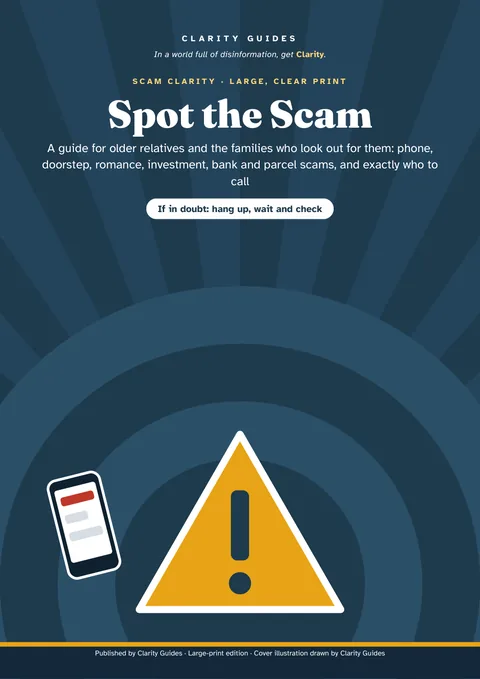
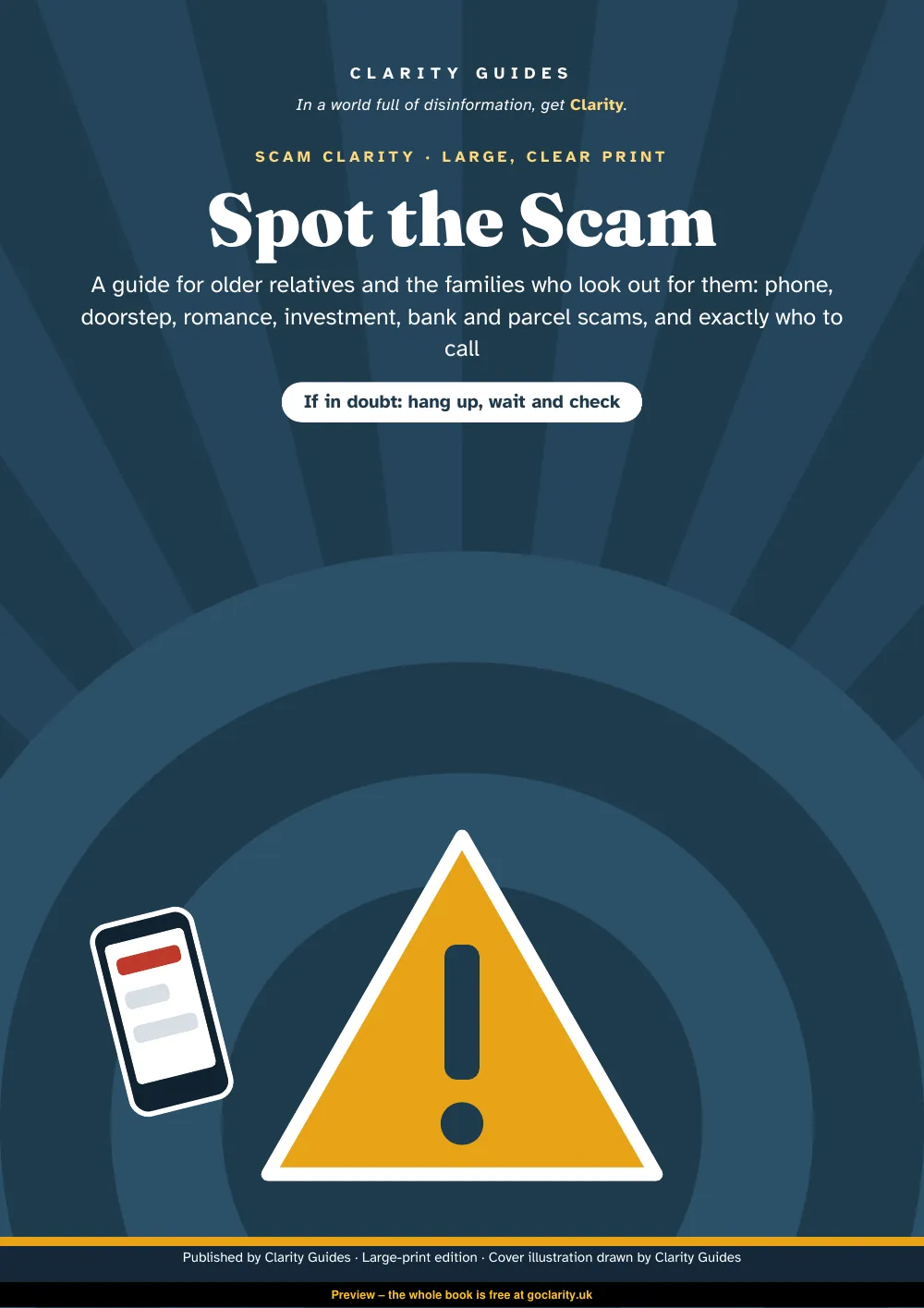
Spot the ScamA Guide for Older Relatives
Free: a calm, large-print guide to the scams that target older people, and a simple family safety plan.
53 pages A4 · phone edition 110 pages · free, no email or sign-up
Read a preview
Read the first four pages right here (of 53). Swipe to turn, tap a page to see it bigger.
The full guide is free: download it above.
About this guide
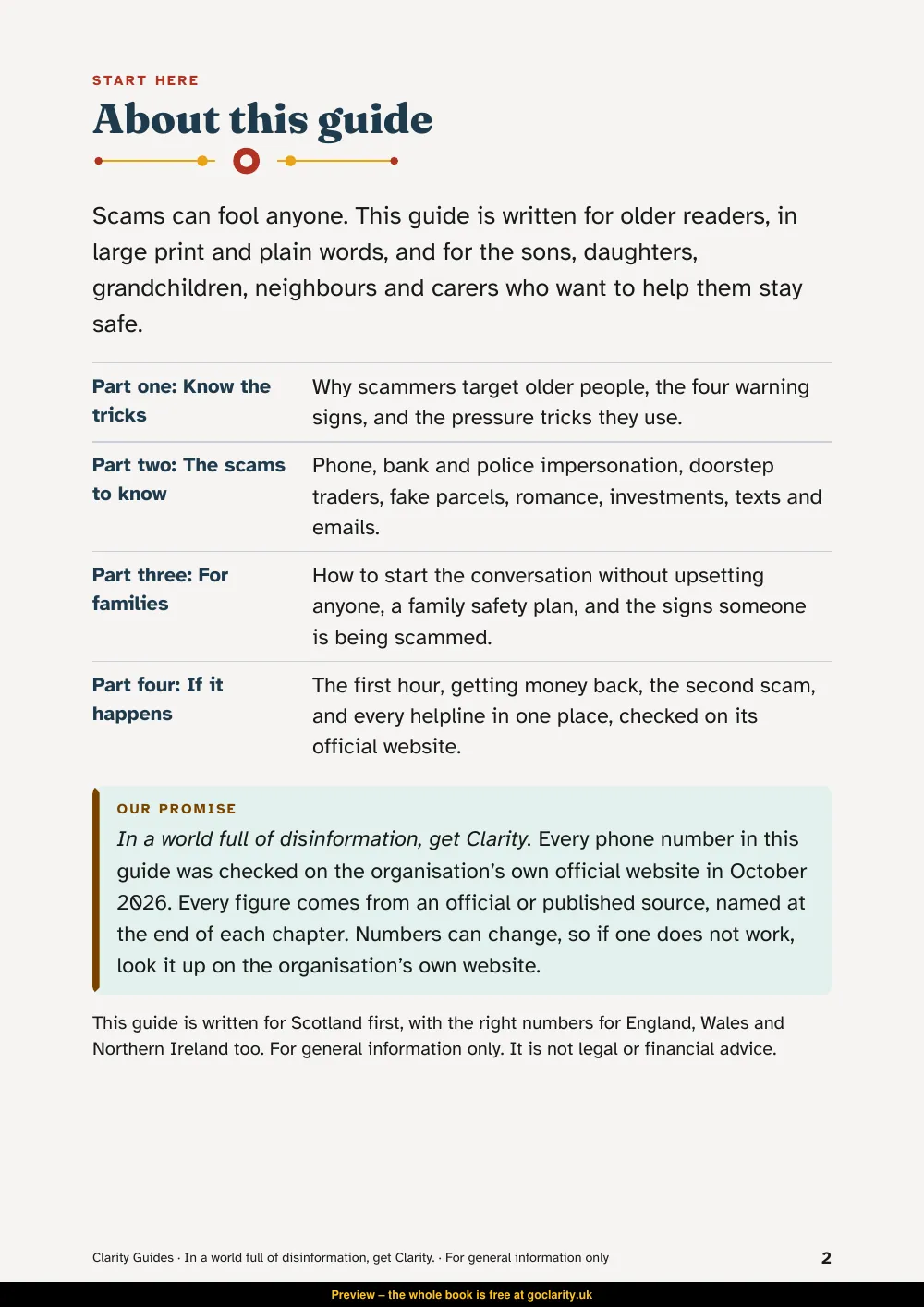
A calm, large-print guide to scams for older people and the families who look out for them, with every helpline checked on its official site in October 2026.
It shows how to spot false claims before you act, from fake news stories and fake celebrity adverts used to sell investment scams to calls pretending to be your bank, and how to check a message on an official number.
More about this guide
It explains why scammers target older people and the tricks they use (urgency, secrecy, authority and fear), then gives a chapter on each of the scams that matter most: phone calls and bank, police and courier impersonation, doorstep traders and rogue builders, fake parcel messages, romance scams, investment and pension scams, scam texts, emails and “Hi Mum” messages, and scam mail and fake charities.
Each chapter has the warning signs, a simple script for what to say, and a “What the evidence says” section. A family section shows how to talk about scams without upsetting anyone, how to make a family safety plan and how to spot the signs that someone is being scammed.
If the worst happens, it shows what to do in the first hour, how to ask your bank for your money back, and how to spot a “recovery” scam. It covers Take Five, 159, Police Scotland, Advice Direct Scotland and Report Fraud, with a “My important numbers” page, worksheets and a call log.
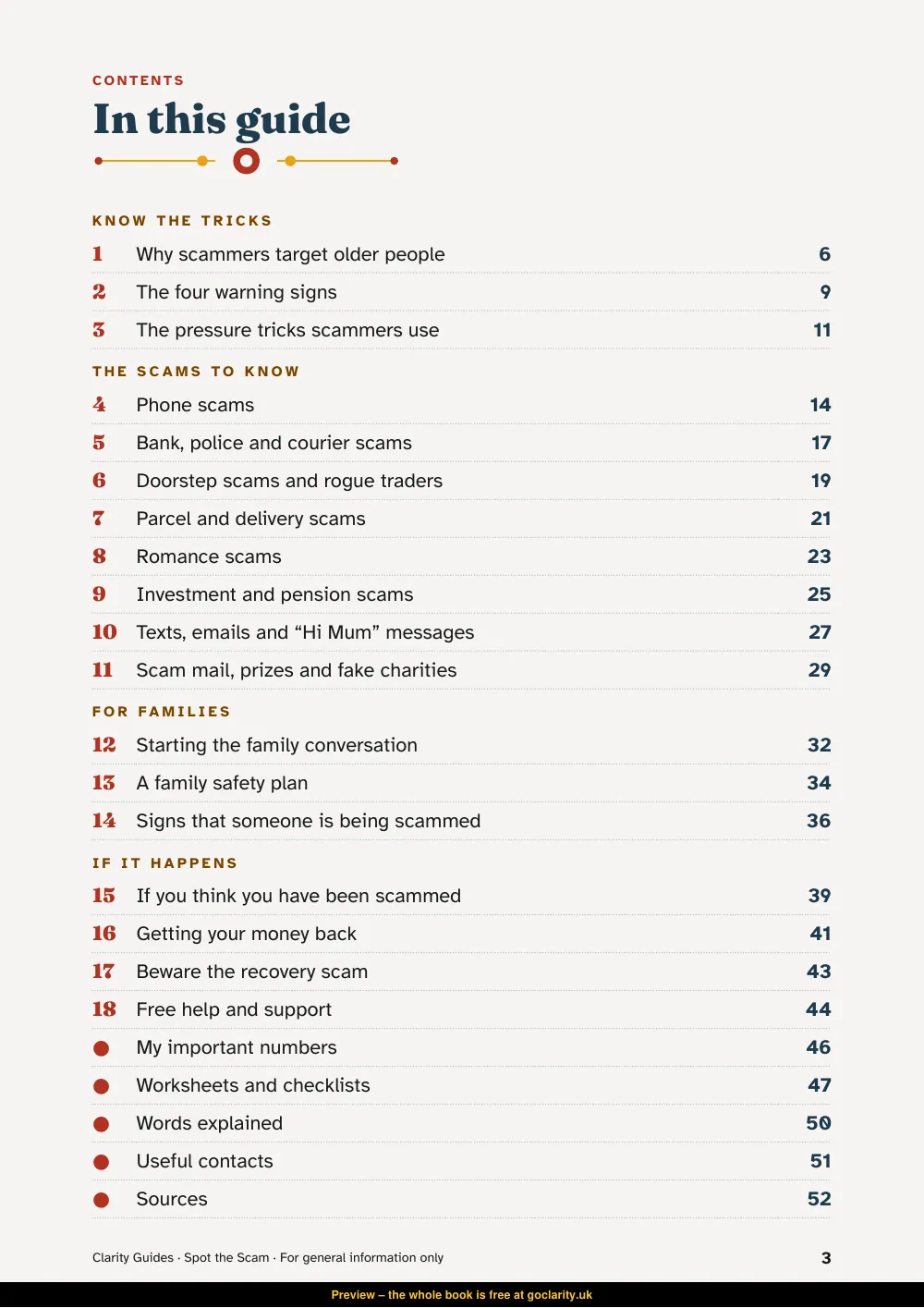
What’s inside
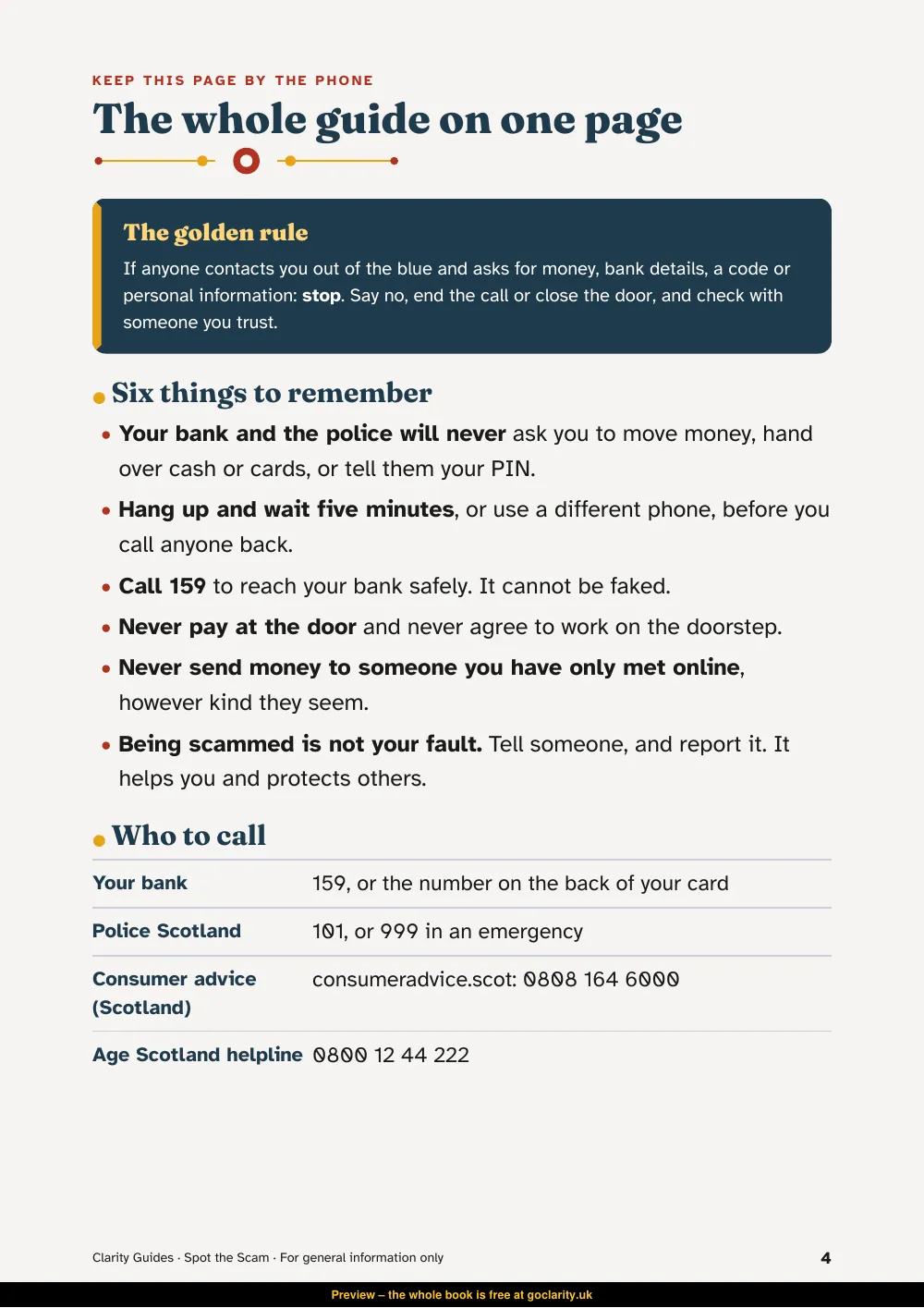
- The whole guide on one page
- Why scammers target older people
- The four warning signs
- The pressure tricks scammers use
- Phone scams
- Bank, police and courier scams
- Doorstep scams and rogue traders
- Parcel and delivery scams
- Romance scams
- Investment and pension scams
- Texts, emails and “Hi Mum” messages
- Scam mail, prizes and fake charities
- Starting the family conversation
- A family safety plan
- Signs that someone is being scammed
- If you think you have been scammed
- Getting your money back
- Beware the recovery scam
- Free help, my important numbers and worksheets
For general information only, not legal or financial advice. If you think you have been scammed, call your bank on 159 straight away, and Police Scotland on 101 (999 in an emergency).