KundaliniA Clear Guide
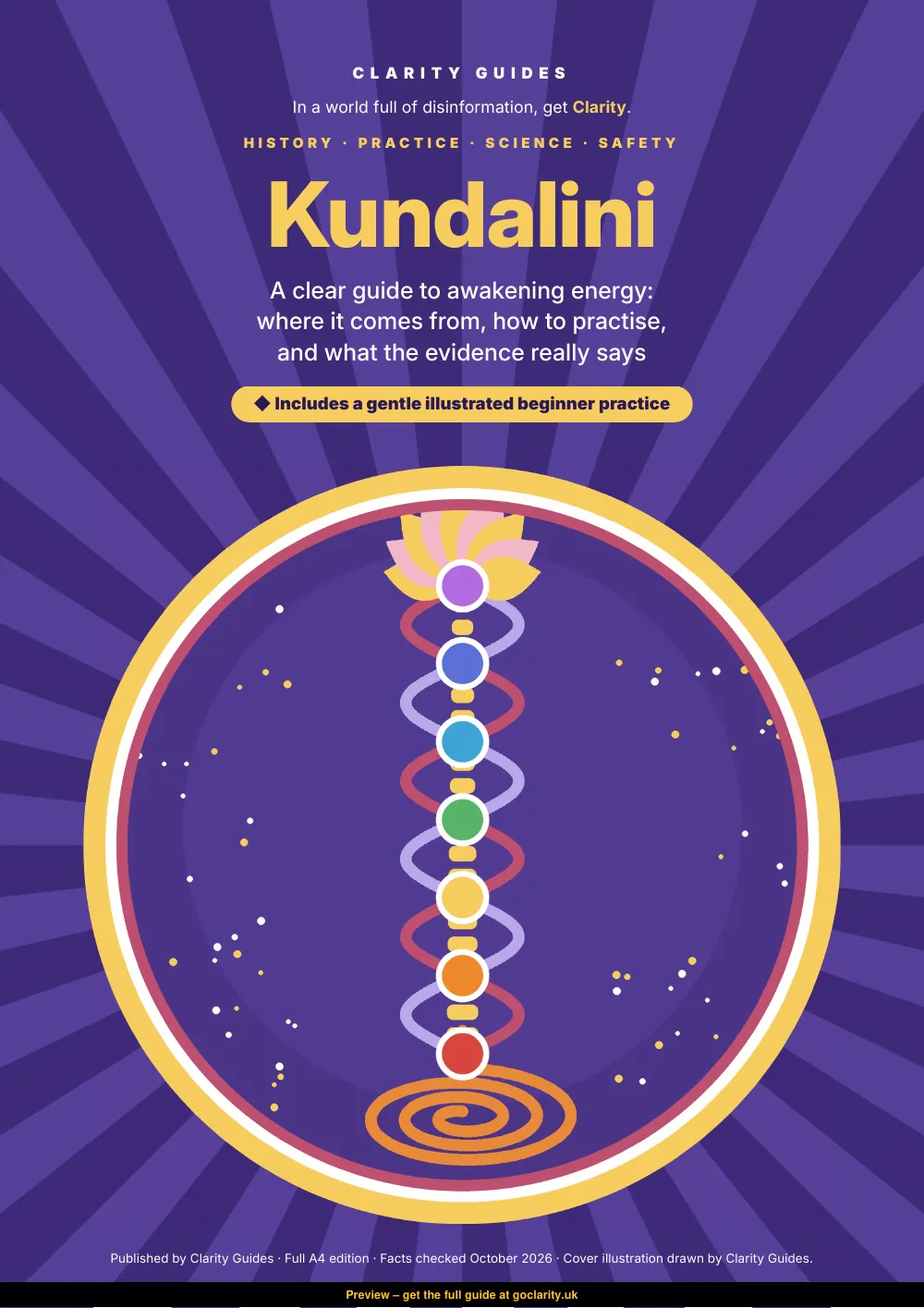
The coiled serpent and the modern yoga style: history, practices, the abuse allegations and what the evidence shows.
50 pages A4 · phone edition 96 pages
On sale soon The full guide goes on sale here soon, £2.22 until 22 October, then £3.49.
Read a previewRead a preview
Read the first four pages right here (of 50). Swipe to turn, tap a page to see it bigger.
The full guide goes on sale soon.
About this guide
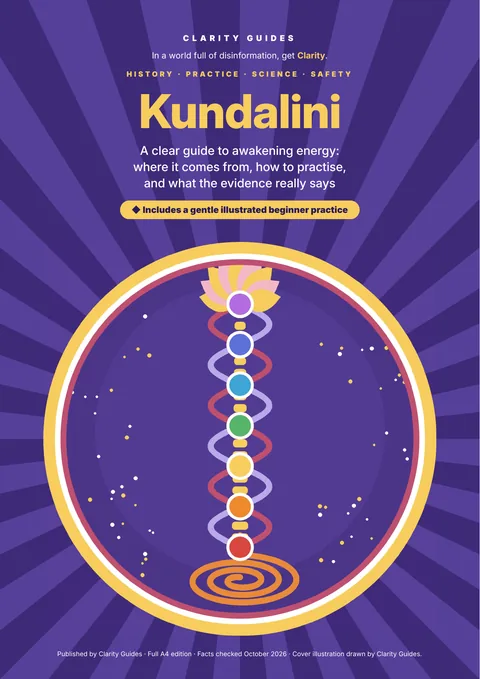
Kundalini is one of the most intriguing ideas in yoga: a coiled energy, pictured as a sleeping serpent at the base of the spine, which practice is said to awaken. It is also the name of a modern style of yoga that mixes flowing movement, powerful breathing, chanting and deep meditation.
More about this guide
This guide traces the idea from tantra to the modern studio, explains the chakra map in brief, and is honest about Yogi Bhajan, the man who brought Kundalini Yoga to the West, and the abuse allegations against him.
It walks you through what happens in a class, the breathing practices, mantra and the gong, a gentle 20-minute beginner session and a four-week starter plan, and checks what has actually been studied against what is claimed. It ends with safety, “Kundalini syndrome” and how to find a good teacher in Scotland and the UK.
Published by Clarity Guides. In a world full of disinformation, get Clarity.
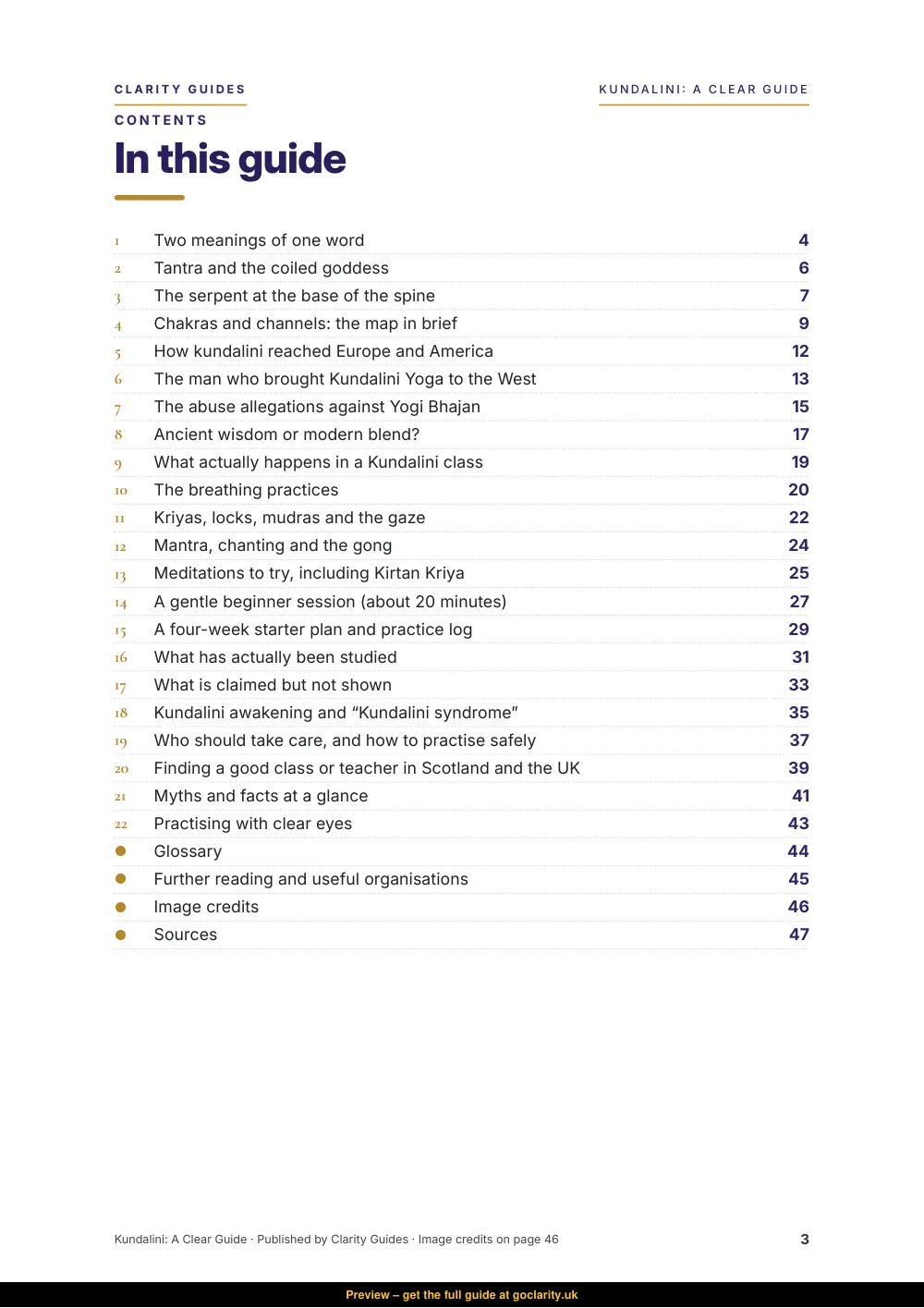
What’s inside
- Two meanings of one word
- Tantra and the coiled goddess
- The serpent at the base of the spine
- Chakras and channels: the map in brief
- How kundalini reached Europe and America
- The man who brought Kundalini Yoga to the West
- The abuse allegations against Yogi Bhajan
- Ancient wisdom or modern blend?
- What actually happens in a Kundalini class
- The breathing practices
- Kriyas, locks, mudras and the gaze
- Mantra, chanting and the gong
- Meditations to try, including Kirtan Kriya
- A gentle beginner session (about 20 minutes)
- A four-week starter plan and practice log
- What has actually been studied
- What is claimed but not shown
- Kundalini awakening and “Kundalini syndrome”
- Who should take care, and how to practise safely
- Finding a good class or teacher in Scotland and the UK
- Myths and facts at a glance
- Practising with clear eyes
General information only, not medical advice. Learn breathing practices from a qualified teacher and stop if you feel dizzy or unwell.
Spotted an error? Let us know
Thanks for helping keep Clarity accurate. Tell us what’s wrong and we’ll check it.
Thank you! We’ve got your report and we’ll check it. Every fix makes the guides better for everyone.