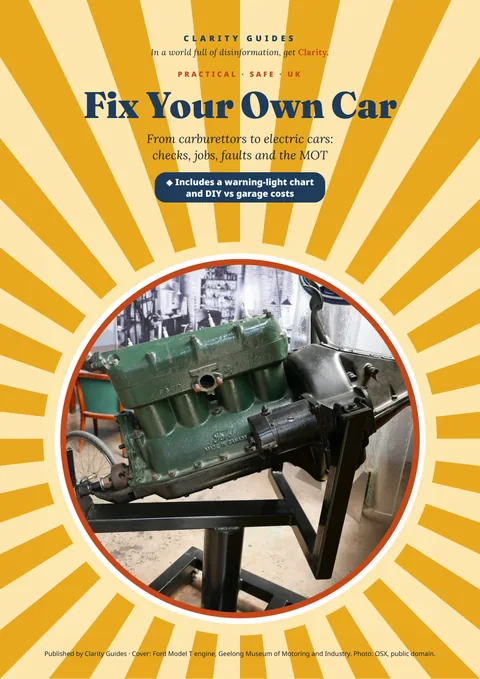
Fix Your Own Car
Weekly checks, code readers and step-by-step jobs from wheels to brakes, with DIY versus garage costs and the MOT.
47 pages A4 · phone edition 101 pages
On sale this week The full guide goes on sale here this week, £2.22 for its first week, then £3.49.
Read a previewRead a preview
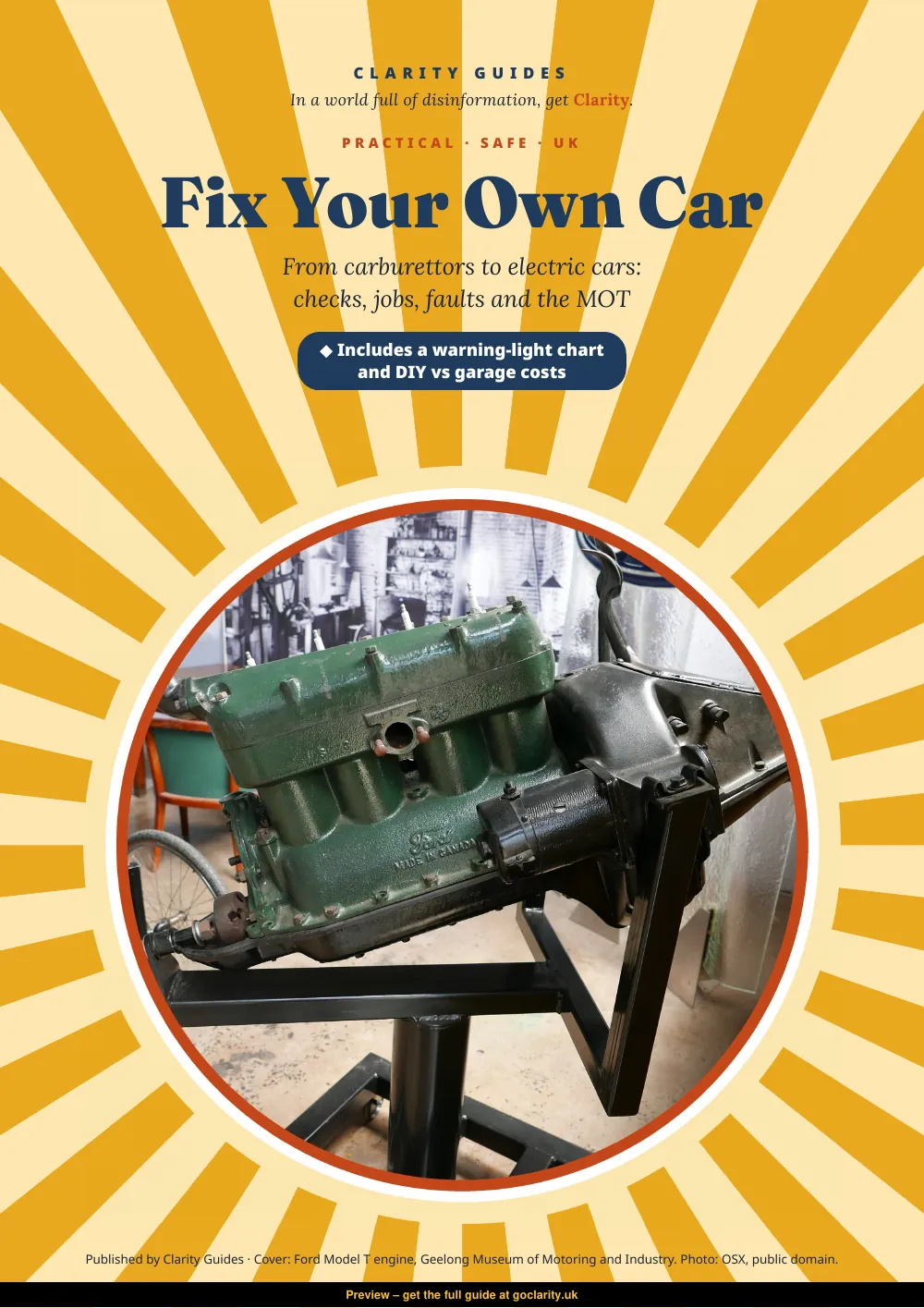
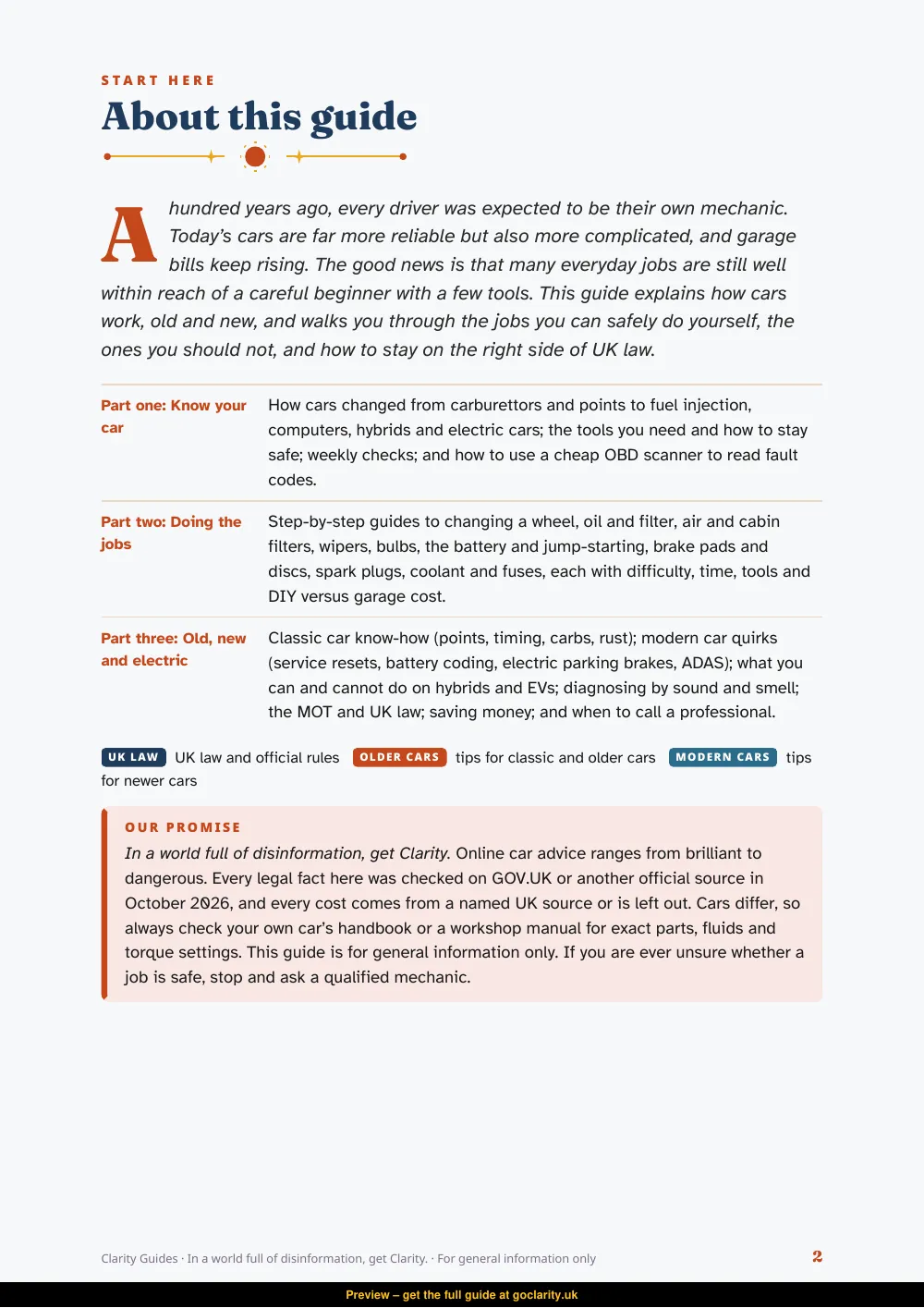
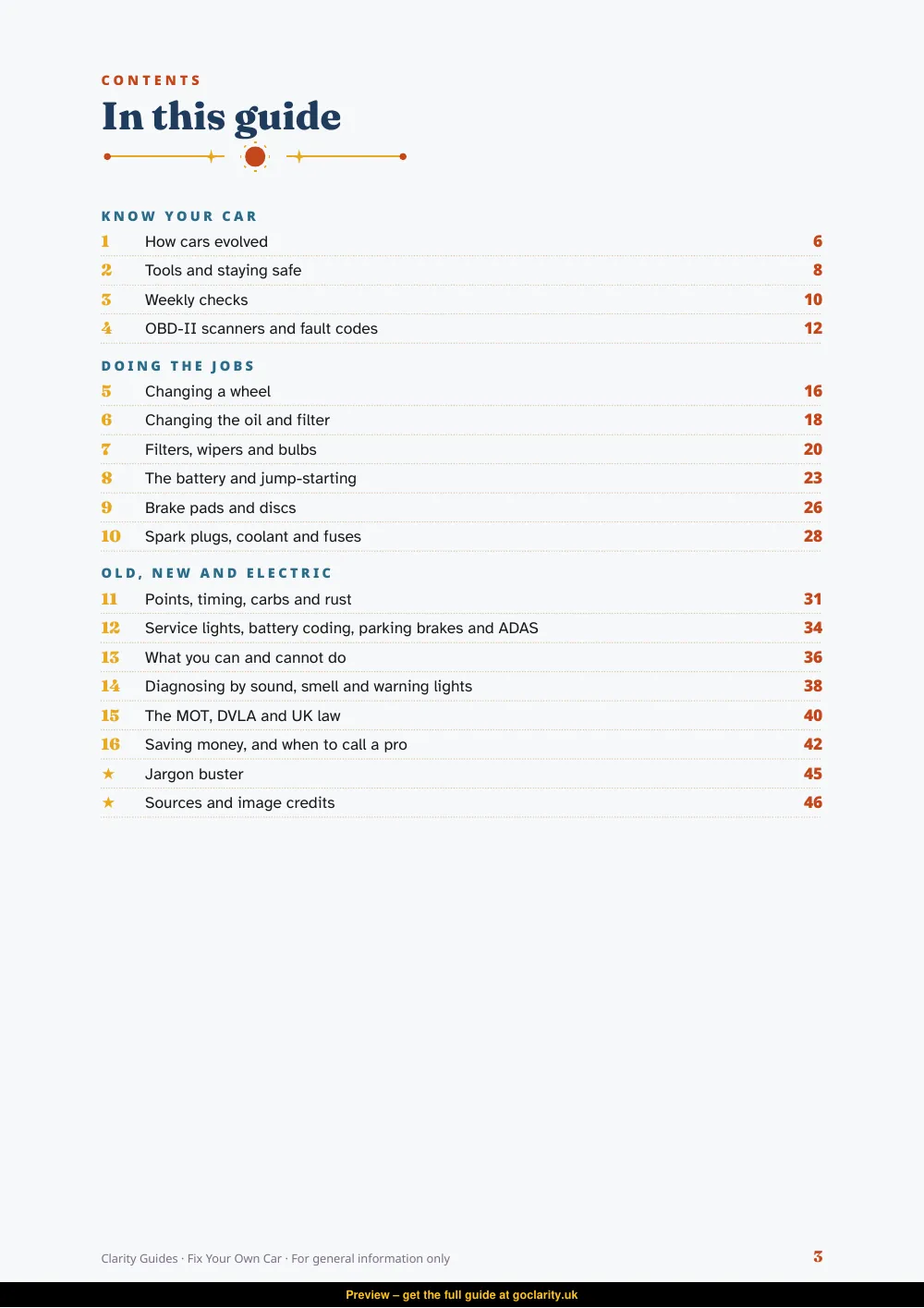
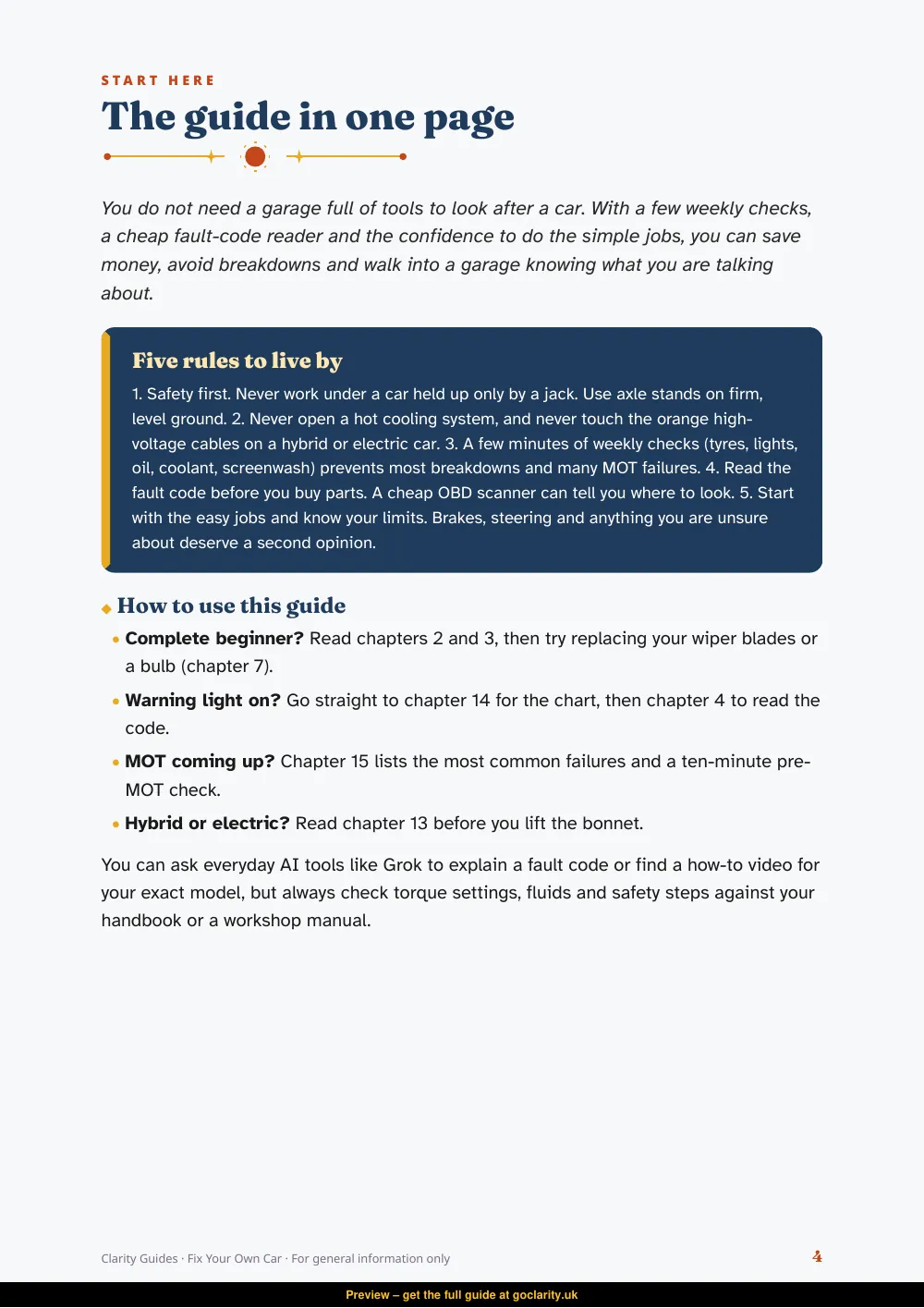
Read the first four pages right here (of 47). Swipe to turn, tap a page to see it bigger.
The full guide goes on sale this week.
About this guide
Looking after your own car can save real money, as long as you do it safely and know when to stop. This practical UK guide shows you how, in plain English.
More about this guide
It starts with how cars evolved from carburettors to computers, the toolkit you need, how to work safely, and the weekly checks that prevent most breakdowns, then explains OBD-II code readers.
Step-by-step job cards follow, each with a difficulty rating, time, tools and a DIY versus garage cost comparison where verified figures exist: changing a wheel, oil and filter, air and cabin filters, wipers, bulbs, the battery and jump-starting, brakes, spark plugs, coolant and fuses.
It then covers older and classic cars, modern cars, hybrids and electric cars, diagnosing faults by sound, smell and warning lights with a colour-coded chart, the MOT, DVLA and UK law, and how to save money and when to call a professional.
What’s inside
- Know your car: how cars evolved
- Tools and staying safe
- Weekly checks
- OBD-II scanners and fault codes
- Changing a wheel
- Changing the oil and filter
- Filters, wipers and bulbs
- The battery and jump-starting
- Brake pads and discs
- Spark plugs, coolant and fuses
- Points, timing, carbs and rust
- Service lights, battery coding, parking brakes and ADAS
- Diagnosing by sound, smell and warning lights
- The MOT, DVLA and UK law
- Saving money, and when to call a pro
- Jargon buster and sources
For general information only. Always follow your car’s handbook, work safely, and use a qualified mechanic for anything you are not sure about, especially brakes, steering and high-voltage parts.